
CHOMOLHARI – SOI YAKSHA TREK
This Chomolhari trek gifts you with a great variety of Bhutanese landscapes and is without doubt one of the most beautiful and unspoiled trekking areas in the entire Himalayas. This intimate wilderness trek offers a great variety of trekking conditions, from remote farmland and blue pine forests, to alpine pasture land and breathtaking mountain views. It’s comfortable, low-impact, and absolutely unforgettable!
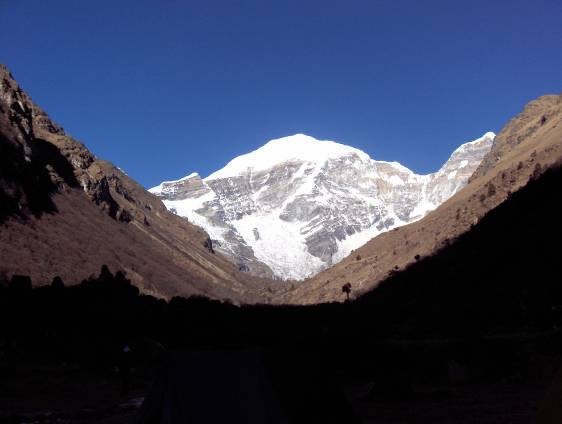
Meadows filled with wildflowers, remote yak herders’ villages, and forests of rhododendron, pine, juniper and fir provide the perfect backdrop for this inspiring and challenging adventure. Trout fishing in the sky blue lake with magnificent view of the three majestic peaks (Chomolhari 7320 m, Jichu Drake 6900 m and Tshrim Khang) mountains is an activity that can be done on a rest day. A chance encounter with the rare species like the blue sheep & snow leopard are an added bonus.
Skeleton Itnerary
Day 01: Arrive Paro. Upon arrival meet and transfer to Hotel.
Day 02: Sightseeing tour of Paro Valley
Day 03: Drive Paro to Drukyel Dzong and Trek to Shana (2890m)
Day 04: Trek Shana to Thangthangka (3575m)
Day 05: Trek Thangthangka to Jangothang (4044m)
Day 06: Acclimatization Day in Jangothang (4044m)
Day 07: Trek Jangothang to Dhumzo (3800 m)
Day 08: Trek Dhumzo to Thombu Shong (4180 m)
Day 09: Trek Thombu Shong to Gunitsawa (2850m) & Drive Gunitsawa to Punakha (3hrs drive)
Day 10: AM: Sightseeing in Punakha & PM: Drive Punakha to Thimpu
Day 11: Sightseeing of Thimpu
Day 12: Visit Takin Zoo, Dordema stupa and drive to Paro
Day 13: Hike to Taksang & EVE: Hot stone bath and diner at the Farm House.
Day 14: Transfer to airport for onward flight
Upon arrival at Paro Airport, meet our representative and transfer to the hotel.
At the hotel lobby there will be a short briefing about the trek/tour and later the guest can retire to the allocated rooms for much deserved shower and rest.
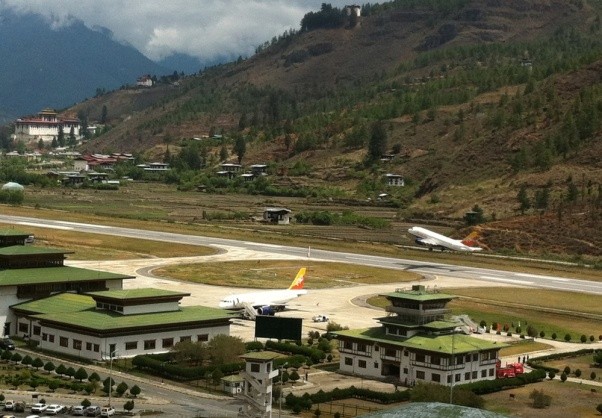
Paro valley is one of the most populated areas of whole country and because of its proximity to the airport, there are many hotels and tourist facilities that have been established close to the airstrip. The valley of Paro contains a wealth of attractions and requires a few days to be properly explored.
Rest of the day is FREE
The Paro valley is one of the most populated areas of whole country and because of its proximity to the airport, there are many hotels and tourist facilities that have been established close to the airstrip. The valley of Paro contains a wealth of attractions and requires a few days to be properly explored.
Lunch at the Hotel.
After lunch, sightseeing of Ta Dzong, the National Museum housed in an ancient watchtower, which has a fine collection of ancient Thangka painting, textiles, weapons and artifact offering a great orientation into Bhutan’s historical, cultural, and religious past.
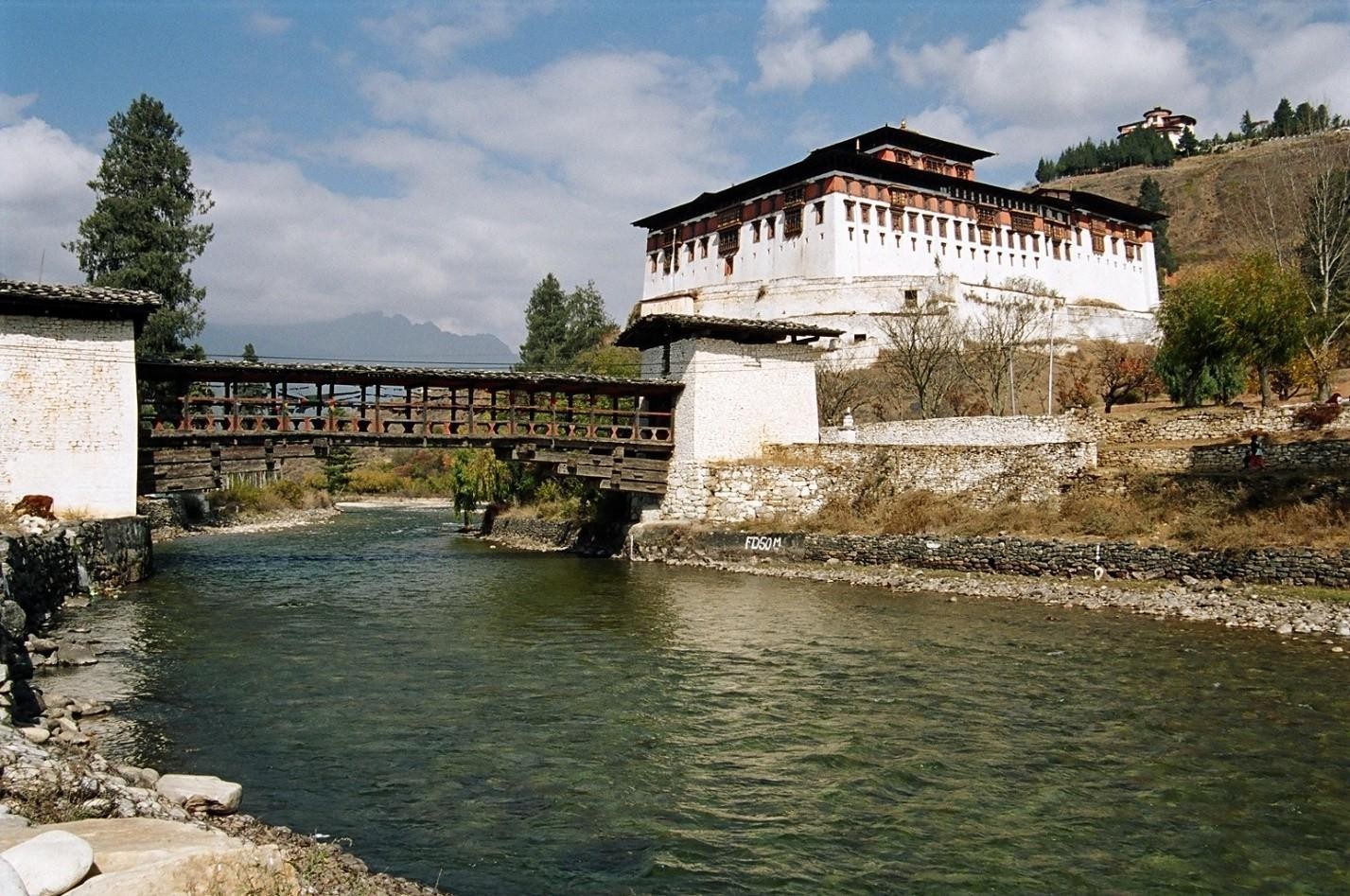
Then descend to the Rinchen Pong Dzong. This massive fortress is approached by a gently sloping flagstone road and a beautiful wooden bridge roofed with shingles and abutted by two guard houses. These days, The Dzong is the Administrative seat of the district of Paro and it also contains a state monastic community of about 200 monks. The central tower (Utse) of the Dzong is one of the most beautiful in Bhutan with its superb woodwork. The Dzong was built in 1645 A.D.
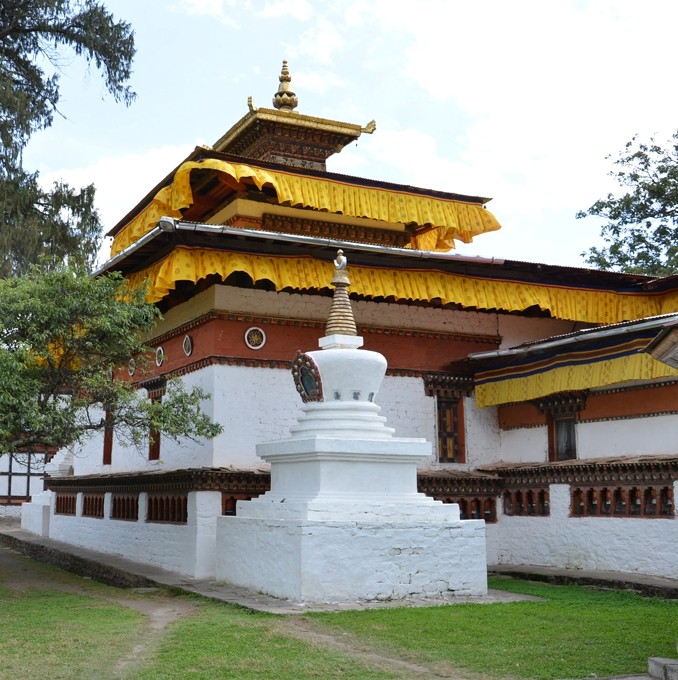
Later visit Kyichu Lhakhang, one of Bhutan's oldest and most beautiful temples. The temple is popularly believed to have been built in 659 by King Songtsen Gampo of Tibet, to pin down the left foot of a giant ogress who was thwarting the establishment of Buddhism in Tibet. As one enters the intimate inner courtyard, there is a mural to the right of the doorway of King Gesar of Ling, the popular Tibetan warrior-king, whose epic poem is said to be the worlds longest. Ashi Kesang Wangchuck the third King’s wife, sponsored the construction of the Guru Lhakhang in 1968. It contains a 5m-high statue of Guru Rinpoche and another of Kurukulla (Red Tara), holding a bow and arrow made of flowers. The inner hall of the main Jowo Lhakhang houses an original 7th-century statue of Jowo Sakyamuni, said to have been cast at the same time as the famous
After breakfast drive up to Drukyel Dzong (north of Paro) located at 2520 m where the motorable road ends. Visit the ruined fortress of Drukyel Dzong which still attracts visitors due to the strategic location of the fort. The fort defended the Paro valley from the Tibetan invasion from the north in the early 17th century. On a clear day, Mount Chomolhari (7320 meters) can be seen towering over the dzong.
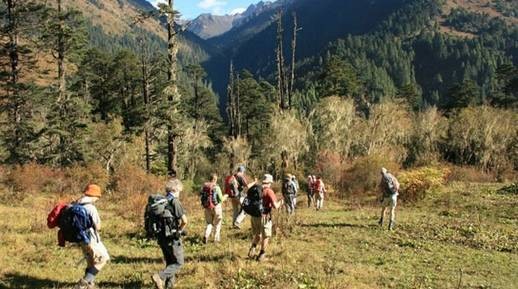
The trek to Shana starts along a dirt road for 1 hour through a wide, rich, cultivated valley, beneath forest-covered mountains, following the Paro Chu (river). The first small settlement encountered is Tsento Zampa, where the traditional Bhutanese farmhouses with bright red chilies drying on their roofs in season. Farmers in this upper valley mostly grow red rice, potatoes and wheat. The trek continues on the east side of the river, gently through the forests. Keep your eyes open for numerous birds and brightly colored butterflies.
After 2 ½ hours the big military camp at Gunitsawa is reached. The camp has a school and some shops, and your trekking permit will be checked at the camp entrance. After 20 minutes through forest, you will suddenly see the camp in a big open field at Shana, near the river. Looking back from camp you can see a big snowy peak, Jo Drakey. Trek Duration: 4 – 5 Hour
Dinner and Overnight at camp
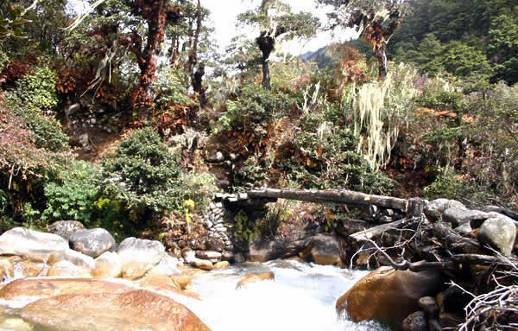
After breakfast follow the river upstream from the campsite as we pass old ruins Shana Bridge, destroyed by major flood caused by glacial lake outbursts in 1950’s. This bridge was used in the old days by travelers coming from or going to Phari in Tibet. The trail climbs steadily through a heavily forested area of oak, rhododendron, bamboo and ferns.
After crossing a small house, Shing Karap is reached. Not far after Shing Karap, we pass a junction en-route, where another path leads up the easy, forbidden pass of Tremo La and onwards to the city of Phari in Tibet. This used to be the old trading route. The trail makes a short steep climb and descent followed by a big bridge at 3250 meters; crossing to the east side of the river is Thongo Zam, where we stop for lunch.
After lunch the trek to Thangthangka continues through the forest consisting of birch, fir, larch, maple and blue pine. After a short climb we reach Seyende Zam where there is a big chorten (stupa). On clear weather we can see Mt. Chomolhari to the North. Further up about 20-30 minutes until we reach our camp in a meadow.
Dinner and Overnight at Camp Trek Duration: 6 – 7 Hour
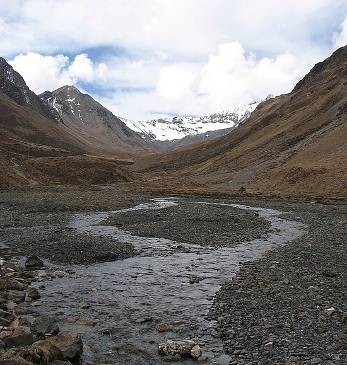
After enjoying the view to Chomolhari and breakfast, the trail slowly leaves the forest line and gradually climbs into a beautiful valley, passing Tegethang, a winter home of yak herdsmen.
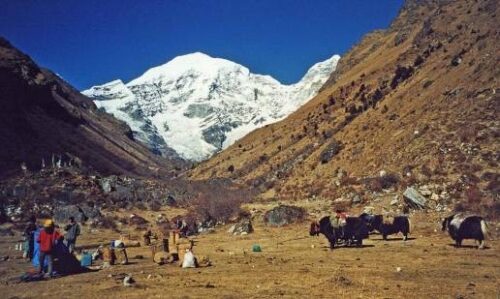
We continue until we arrive at Jangothang, Chomolhari base camp. This valley is wide and high with mountains like Chomolhari. Jichu Drake overlooks the camp which is visibly nearby are the ruins of an old fortress.
Dinner and Overnight at camp Trek Duration: 4 – 5 Hour
After breakfast we walk towards the east up to the twin lakes of Tsho Phu. From the lakes there is a spectacular view back to Chomolhari and Jichu Drake mountains. Watch out for a herd of Himalayan Blue Sheep in this valley.
Later return back to camp and rest of the day at leisure.
The day in Jangothang provides plenty of possibilities for day hikes with great views of lakes and snow capped mountains such as Chomolhari and Jichu Drake. There are good chances to spot some blue sheep on the upper slopes of the valley. Jangothang is a perfect place for acclimatization before heading up to higher elevations. Trek up to Tosoh or hike around the area. There are good short hiking trails in three directions. Chomolhari and it’s subsidiary mountain chains lie directly west, Jichu Drake to the north and a number of unclimbed peaks to the east.
Dinner and Overnight at camp
After breakfast, the trail leads to a last settlement in the valley and drops to the Paro Chhu. Take the right side trail near the prayer flag pole and then a slow and steady climb brings us to a ridge and a wide open valley. Grazing Yaks are a common sight as we walk along the beautiful lake of Tshophu (4,380m). Ahead we can see the flow of water that feeds the two lakes. There are numerous fish in the lake but is forbidden to fish. Leave the lake and then make a long steep ascent to the Bhonte La (pass) at 4,890 m, the highest point of this trek, which is a marked by a pile of rocks and prayer flags.
After a celebratory cheer, make a long arduous steep descent all the way to the Dhumzo Chhu (river). Then a leisurely trek downstream for a while passing a few houses of Dhumzo. Cross the bridge and arrive at the campsite.
Dinner and Overnight at camp Trek Duration: 7 – 8 Hour
After a challenging but rewarding previous day, today is more enjoyable and a little less strenuous.
Leaving the campsite, the trail climbs 100m over a ridge and then drops steeply to another stream. Take the bridge and slowly make an ascent to the ridge. Turn south and ascend past a few houses to Takhung La pass (4,520m). Then a steep descent to the valley floor to Thombu Shong, a beautiful valley with a few yak herder huts for our overnight camp.
Dinner and Overnight at camp
After an early breakfast, we start our last day of trek by a climb from the valley to Thombu La at 4380m. Then drop gradually to 4000m. The trail then makes a steep descent through forests slowly switch backing down along the ridge to arrive at the valley floor.
A pleasant walk through a pine forest leads us to the helipad at Gunitsawa and waiting vehicles for the 3 hour drive to Punakha. After lunch, we bid farewell to the trek team and board the vehicles and set out to visit the Punakha valley, the former capital of Bhutan via the Dochula pass located at 10,000 feet at the place of 108 Chortens. From here (weather permitting) there is spectacular view of the Himalayas.
Dinner and overnight at the hotel
AM: Drive for 20 minutes to reach Punakha Dzong that was built in 1637 and the winter residence of the monk body. This remarkable fortress is built between two rivers the Pho-chu (male) and the Mo-chu (female) and has survived many glacial floods and fire. The Punakha Dzong has been restored to its full glory after about 12 years of restoration work and is replete with detailed traditional carvings and colorful paintings in perfect condition. It also houses many sacred temples.
After Sightseeing board the waiting vechile and drive to Thimpu. (2-3 hrs)
Upon arrival at Thimpu, Check into Hotel.
Thimpu is the capital city & has a population of 45,000. It is, perhaps the most unusual capital city in the world with its bustling town on the banks of its own river and set gloriously in the hills of its own valley. A regal town, Thimphu is home to the revered Bhutanese Royal family and to several foreign missions and development projects.
Later, proceed for the sightseeing tour of Thimpu with a visit to the National Memorial Chorten also known as Dodrul Chorten. This iconic landmark was envisaged by the third king, His Majesty Jigme Dorji Wangchuck, as a monument to world peace and prosperity.
Completed in 1974 after his untimely death, it is both a memorial to the Late King ("the father of modern Bhutan") and a monument to world peace. The paintings and statues inside the monument provide a deep insight into Buddhist philosophy.
Then, visit Taschichho Dzong, the main secretariat building which houses the office and throne room of His Majesty, the king of Bhutan and it is the country’s administrative headquarters as well as the legislative body.
The National Assembly lies deep in the valley in all its grandeur.
Dinner & Overnight at the Hotel
After breakfast, drive for about 12 km north of Thimphu where the road ends at a parking lot. The trail to Tango Monastery is a climb of 280 m and takes about a little more than an hour to reach it. The walk is through beautiful forests and is an excellent place for bird watching. From the top, it commands good views of the valley. The Tango monastery is located at an altitude of 8500 meters and was built by Lama Gyalwa Lhanampa in the 12th Century and the present building was built in the 15th century by the Divine Madman, Lama Drukpa Kunley. History states that in 1616 The Shabdrung Nawang Namgyal visited Tango and meditated in a cave near the goenpa. His meditations helped ensure the defeat of the invading Tibetan army and the head lama, a descendent of Lakpa Drukpa Kunley presented the goenpa to him who carved the sandal wood statue of Chenrezig and installed in the monastery. After the sightseeing return back to the Hotel
EVE: Drive to the Doderma Stupa.
Bhutan has the largest and tallest statue of Lord Buddha and will perhaps become the eighth wonder of the world. The 169ft (51m) bronze Buddha Dorderma, symbolizing indestructibility, is erected at Changi Kunsel Phodrang overlooking the capital city, Thimphu. This project is initiated by His Eminence Trizin Tsering Rinpoche.
The statue accommodates 100,000 statues of eight-inch and 25,000 statues of twelve-inch Buddha Dordenma, made of copper and glided in gold. It is placed in a multi-layered grid boxes. The names of sponsors are inscribed separately on copper plates and displayed in the meditation hall. The well- being of future generations is dependent on the kindness and compassion of the present sponsors and Buddha makers. This project is expected to benefit self and all sentient beings. From here one can see the mountains (weather permitting) and the valley of Thimpu spread out below.
Later return to the hotel.
Dinner & overnight at the Hotel
After breakfast, check out of the hotel and set out to visit the Motithang mini zoo to see the rare “Takin”, national animal of Bhutan. It is also called Gnu Goat OR Cattle Chamois and found in the eastern Himalayas in forested valleys to rocky, grass-covered alpine zones, at altitudes between 1,000 and 4,500 m above sea level. Takin feed in the early morning and late afternoon, grazing on a variety of leaves and grasses, as well as bamboo shoots and flowers. They have been observed standing on their hind legs to feed on leaves over 3.1 m (10 ft) high. Salt is also an important part of their diets.
After visit of Takin Zoo we continue our drive towards Paro. (1 hours drive).
Upon arrival, Check into Hotel
Dinner and Overnight at the hotel
After an early breakfast board the waiting vehicle and drive to Satsam Chorten (10 Kms) for a short trek to Taktsang Monastery. The Taktsang also known as “the Tiger’s Nest” was named after Guru Rimpoche miraculously flew to the cave on the back of a tigress from Khempajong in the region of Kurtoe. From Satsam, start a steady climb of about 2 hours on a well defined trail through wooded alpine forests to the Taktsang Monastery. According to the legend, the tigress was a form taken by a consort for the occasion. Guru Rimpoche meditated for three months in a cave in Taktsang and converted the Paro valley to Buddhism. Later, Longchen Pelki Singye, a student of Guru Rimpoche also meditated here in a cave which came to be known as Pelphug or “Pelki’s Cave.
Taktsang is one of the holiest pilgrim sites in the Himalayas. There are 13 holy places in the complex. His Holiness, the 69th Je Khenpo Late Gayshe Gaden Rinchen was born in a cave on the way to the last viewpoint of Taktsang.
After the visit, walk down to the Restaurant for a much deserved lunch break. Then descend to the valley floor to meet up with waiting vehicle and drive to Paro town.
EVE: Traditional Hot stone bath and Dinner at the farm House
Overnight at the Hotel
Day free until final departure transfer to airport for onward flight.
Transfer to airport and depart.
Includes/Excludes
Cost Includes
- Accommodation on twin/double sharing room on MAP(3-star) : River Valley View in Paro for 04 nights, Tashi Yoedling in Thimpu for 02 Nights, Meri Puensum in Punakha for 01 Night
- Lunch at selected local Restaurants
- SDF (Government Fees)
- Visa
- 6 Nights / 7 Days CHOMOLHARI TREK inclusive of accommodation in 2 man A tents, Foam Mats, Dining, toilet and kitchen tents, all meals prepared by a team of a cook + kitchen helpers and assisted by horsemen and horses to carry luggage.
- English-speaking Bhutanese guide
- One-time monument fees where applicable
- Bottled water in vehicle
- Hot Stone bath
Cost Excludes
- International airfare
- Personal insurance and evacuation.
- Flight delays or cancellation due to adverse weather condition.
- Photography charges for Still and Video cameras inside monasteries.
- Items of a personal nature such as bar bills, alcoholic beverages, bottled -drinks and mineral water, extra mileage, etc.
- Personal gratuities such as tips Escort, hotel staff, guides and drivers etc.
- FINE for venturing into prohibited area
- Oxygen and Mineral water
- Costs incurred due to natural calamities, strikes, breakdowns and beyond the control of Sacred Summits (P) Ltd and its associates.
- Items not mentioned in the cost includes


