
(Fly In Drive Out)
A sacred land of myths and mysteries inhabited by the ever smiling people, has not only exerted a magnetic pull upon travelers for centuries but also spies, missionaries, scholars, geographers, mystics, soldiers and cranks, etc. Yet, only a few intrepid, serious and determined have been able to make it.
Upon arrival met by the representative at the airport and board the waiting vehicle and drive to the Hotel. Guests will be welcomed with a welcome drink at the hotel and assigned the rooms.
18:00 Hrs: Tour Briefing will be carried out at Hotel lobby and followed by the welcome dinner in a Typical Nepali Restaurant.
Overnight at the Hotel
After the breakfast, board the waiting vehicle and proceed for the Sightseeing tour of Kathmandu City + Swyambhunath & Patan City.
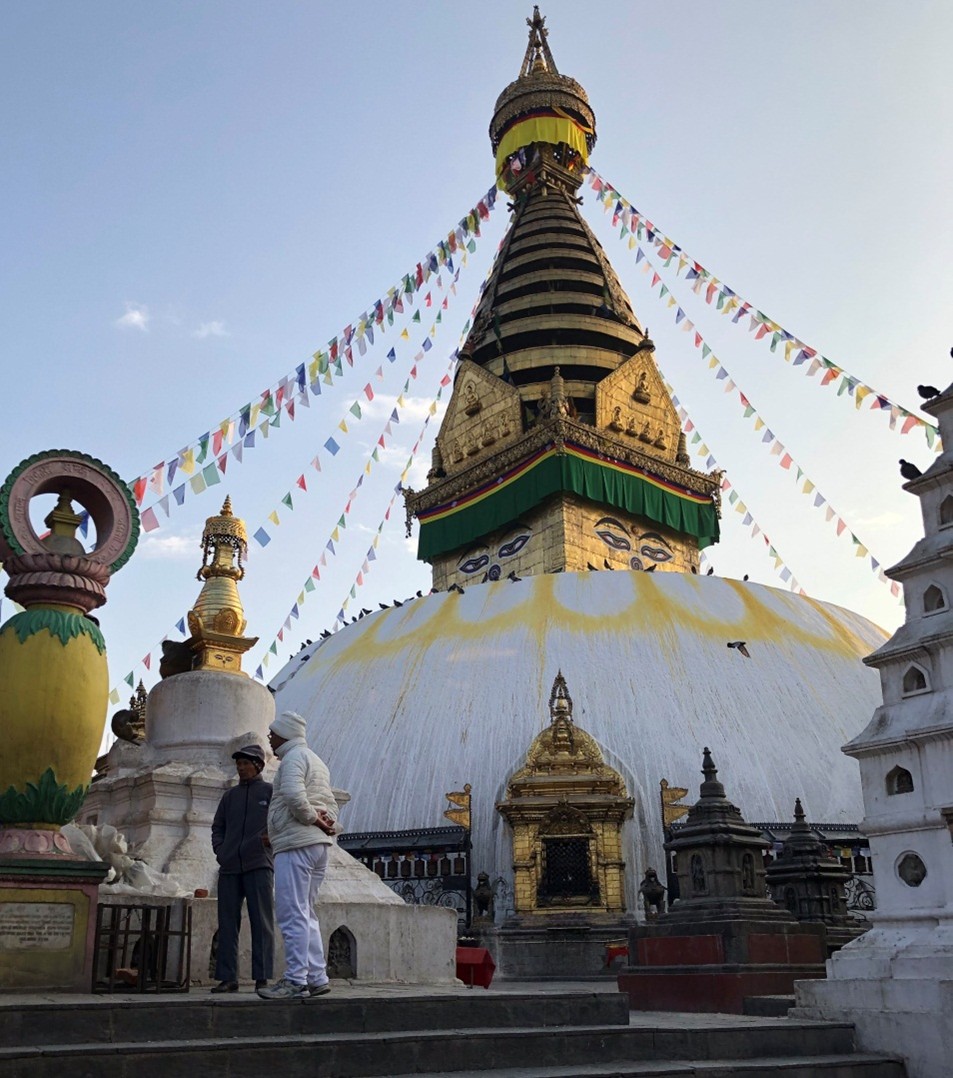
Swayambhunath Stupa - one of the protected monument sites of the Kathmandu Valley. It is situated on the top of the hill lying 4 kilometers west of Kathmandu. More than 2,500 years old, this ancient landmark is connected to the visit of Manjushree who created Kathmandu – a lake than – by draining its waters. The sage saw a celestial lotus in bloom on the top of this hill and sacrificed it. It is an important pilgrimage center as well as the center of art, architecture, religion and culture of Mahayana Buddhism.
The stupa of Swayambhunath is a hemispherical mound of compacted earth, and is built to specific rules, and is replete with symbols. The mound represents the four elements of earth, fire, wind and water. The 13 gilded rings of the spire symbolize the 13 steps of the ladder leading to Nirvana, the final salvation. The shrine is bedecked in colorful prayer flags. The pilgrim’s progress to Swayambhunath holy premises is actually through a sylvan path of 365 steps. The entrance is graced by a huge Vajra (Symbol of thunder bolt). Statues of Buddha adorn the four corners of the stupa. Statues of goddess Ganga and Jamuna guard the eternal flame behind it. There is a Tibetan gompa (monastery) and innumerable Chaityas (small stupas). The balcony of Swayambhunath is ideal for viewing the entire valley spread out below.
After the sightseeing tour of Swayambhunath take lunch at convenient place Or return to the Hotel. Later drive to the Kathmandu Durbar Square.
Ancient Kathmandu Durbar Square with its many beautiful temples and shopping courtyards. As one crosses from the modern area of New Road into the Durbar Square, the onetime Freak Street, one is suddenly in the midst of Kathmandu’s famed medieval architecture.
The major tourist attractions on this tour includes a visit to the Hanuman Dhoka (Hanuman gate) which takes its name from the Monkey God, Hanuman from the epic, Ramayana The palace of the Malla Kings located in the Hanuman Dhoka is of the 14th Century and was a ceremonial palace of the Shah dynasty. Important traditional Royal ceremonies including the coronation of the King of Nepal used to be conducted at Hanuman Dhoka Palace.
Near the Hanuman Dhoka is the house of the Living Goddess Kumari - Kumari Bahal. Two painted stone Lions stand guard at the entrance. Visitors may enter the courtyard to see the Living Goddess but are forbidden to take photographs.
After the sightseeing tour of Kathmandu city, drive to Patan city for Sightseeing.
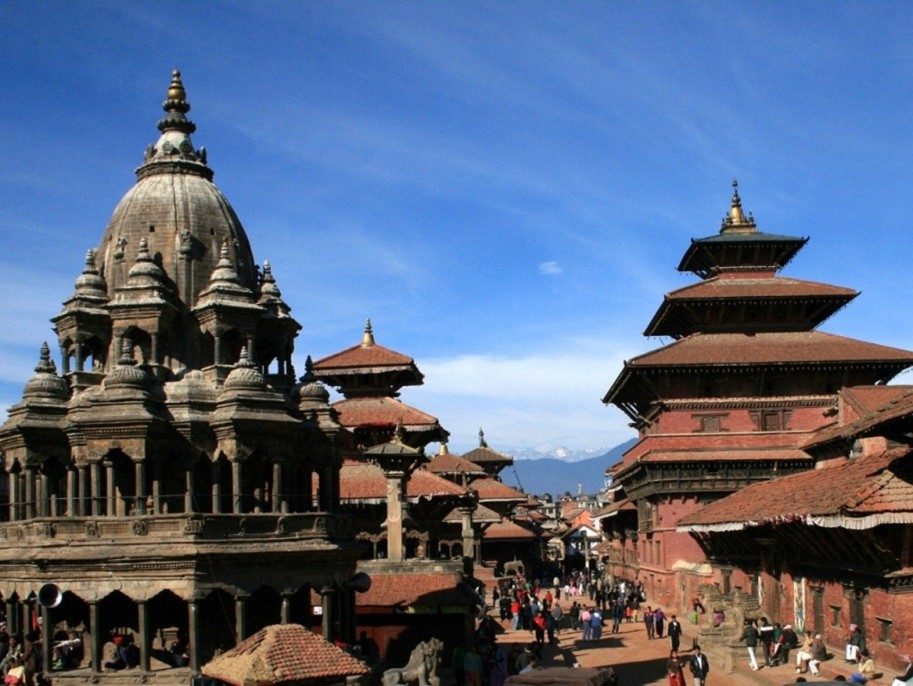
Ancient Patan city also known as Lalitpur or “The City of Fine Arts” is about five Kilometers southeast of Kathmandu and has Hindu temples and Buddhist monuments. The major tourist attraction of Patan is the Durbar Square situated in the heart of the city and constitutes the focus of the visitor’s attraction. The square is full of ancient palaces, temples and shrines noted for their exquisite carvings. The Patan Durbar consists of three main chowks or courtyards, the central Mul Chowk, Sundari Chowk and Keshav Chowk. The Sundari Chowk holds in its center a masterpiece of stone architecture, the Royal Bath called Tushahity. Also visit, Krishna Mandir, built in the seventeenth century and dedicated to Lord Krishna. It holds a commanding position in the palace complex of Patan and is supposed to be the first specimen of its kind in Nepal having 21 spires and completely made of stone.
Later visit the Hiranya Verna Mahavihar (Golden Temple) located inside Kwabadehal. This Lokeshwor (Lord Buddha) was built in the twelfth century by King Bhaskar Verma. Inside the upper storey of the pagoda, are the golden image of Lord Buddha and a large prayer wheel.
After the sightseeing tour of Patan board the waiting vehicle and drive back to Hotel.
Overnight at the Hotel
After breakfast met by guide and board the waiting vehicle and proceed to Bhaktapur which lies 12 kilometers east of Kathmandu. It is shaped like a conch shell and Pottery, weaving and thanks painting are its traditional industries.
The major sightseeing places in Bhaktapur include:
The Durbar Square is the main square of the city contains innumerable temples and other architectural showpieces like Lion Gate, the statue of Bhupatindra Malla the Picture Galley, the Golden Gate, The Palace of 55 windows, the Bastille temple and the Bell of barking dogs, etc. The statue of Bhupatindra Malla in the act of worship is placed on a column facing the palace. Of the many statues available in Nepal this is considered to be the most magnificent.
The National Art Gallery contains ancient and medieval paintings belonging to Hindu and Buddhist school depicting Tantrics of various period and descriptions.
The Palace of 55 Windows was built in the seventeenth century by King Bhupatindra Malla. Among the brick walls with their gracious settings and sculptural design, is a balcony of 55 windows. This balcony is the masterpiece of wood carving.
The Natyapola Temple is a five storey pagoda built in 1702 A.D. by King Bhupatindra Malla. It stands on a five-terraced platform. On each of the terraces, squat a pair of figures, two famous wrestlers, two elephants, two lions, two griffins, Baghiani, Singini – the tiger and the lion goddesses. This is one of the tallest pagodas and is famous for its massive structure and subtle workmanship.
Continue on to the Dattareya Square to visit the old Pujari Math considered one of the oldest maths (dwelling of a priest) in the Kathmandu Valley. It has now been converted into a Woodcarving Museum.
Since the early Licchavi period (300-789 AD), the woodcarvings are present everywhere in the Nepal architecture. Woodcarving is specifically a Newari art and Bhaktapur is one of the most famous for it. In the Bhaktapur district alone there are some 500 active wood crafters. The peacock window is world famous. After visiting the Woodcarving Museum we proceed towards the Thanka Painting workshop.
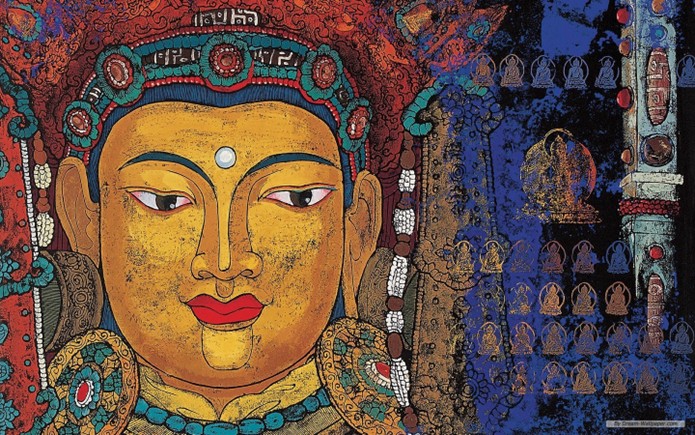
The Thangka, also known as tangka, thanka or tanka (Nepali pronunciation: Nepal Bhasa is a painting on cotton, or silk, usually depicting a Buddhist deity, scene, or mandala of some sort. The thangka is not a flat creation like an oil painting or acrylic painting but consists of a picture panel which is painted or embroidered over which a textile is mounted and then over which is laid a cover, usually silk. Generally, thangkas last a very long time and retain much of their lustre, but because of their delicate nature, they have to be kept in dry places where moisture will not affect the quality of the silk. It is sometimes called a scroll-painting.
These thangka served as important teaching tools depicting the life of the Buddha, various influential lamas and other deities and bodhisattvas. One popular subject is “The Wheel of Life”, which is a visual representation of the Abhidharma teachings (Art of Enlightenment). After the sightseeing tour of Thanka Painting workshop we proceed to the Pottery Squares of Bhaktapur.
This age old craft has survived the calls of modernization and today it enhances Bhaktapur’s value as a city of Heritage. Walking towards Bolachhen/ Talakwa, better known as the town’s Potter’s square, the streets are lined with small shops selling innumerable items produced in baked clay and the pavements are filled with black clay items drying in the strong sunlight. Within the Talakwa pottery square, 2 important temples of a solid- brick Vishnu temple and the double roofed Jeth Ganesh can be seen in a very traditional way. On the northern side of the square a small hillock is topped by a Ganesh shrine and a Shady peepal tree. Like potters all over Nepal, the men of Bhaktapur employ primitive techniques. The heavy old wooden wheels have been for the most part replaced by weighted truck tyres which spin faster. Guided by skilled hands, the cones of wet black mud are shaped and smoothed into yoghurt bowls, washbasins, giant grain storage jars, tiny oil lamps and even ashtrays. With the exception of the planting and harvesting season, the potters of Bhaktapur are always busy shaping the natural clay into any imaginable shape. The craftsmen have passed this technique down from generation to generation and even today, the majority uses traditional techniques.
The next potter’s square is located at Suryamadhi. Walking around this potter’s square, it becomes clear that the “piggy bank” must be the most popular item produced here. In less visited areas, Suryamadhi, south of Dattatraya Square, potters are occupied making the traditional bowls for the famous local curd, ‘Juju Dhau’.
All around the square, pots lined up in symmetric patterns dry in the sun, waiting for a final firing in temporary kilns of heaped straw.
After the sightseeing tour of Bhaktapur city, board the waiting vehicle and drive drive to Pashupatinath Temple, approximately 15 kilometers from Bhaktapur City.
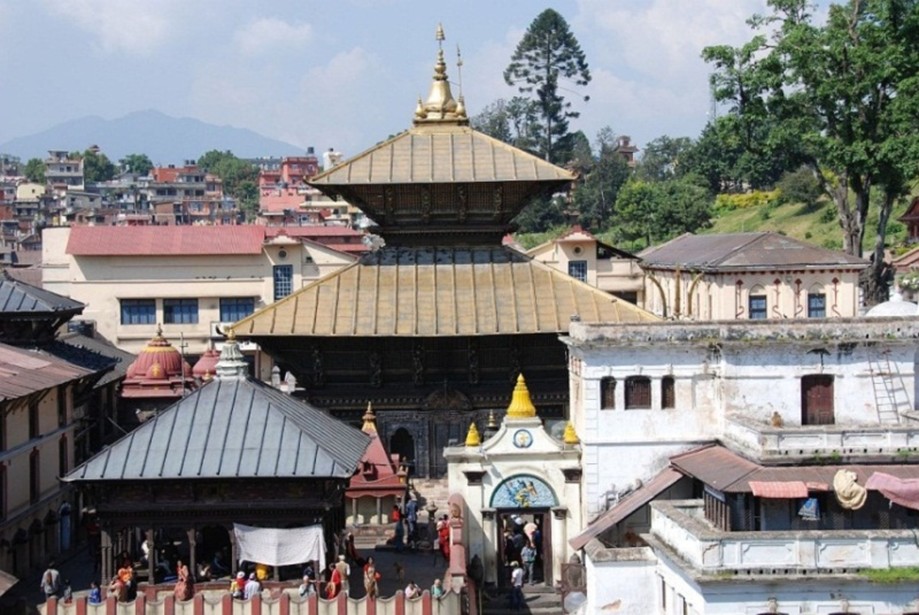
The Pashupatinath Temple - is the most sacred Hindu Temple in the world and is amongst the five principle pilgrimage sites for the Hindus. On an annual pilgrimage during Shivaratri Festival thousands of devotees of Lord Shiva from all the Hindu communities of the world pay their homage here.
Pashupatinath is the reincarnation of Shiva in his most benevolent form as the shepherd of fertility. There are no animal sacrifices in this temple. Only fruits, flowers and vermilion are offered. It lies on the banks of the holy Baghmati River and for the Hindus, to be cremated at Pashupatinath means, a direct passage to heaven.
After Completion of the Sightseeing, drive back to Hotel.
Rest of the evening is free to relax and explore around the city.
Overnight at the Hotel
This day is kept free for the Visa Processing.
Overnight at the Hotel
Upon arrival met by representative at the airport and later board the waiting vehicle and drive to Lhasa.
Lhasa - capital of Tibet at an altitude of 3650m is situated on the north bank of the Kyichu River in the province of U (central Tibet). Two high craggy hills stand up in isolation from the valley floor. One, Red Hill, is topped by the Potala Palace and the other, Chockpori or Iron Hill, is crowned by a tall antenna. Lhasa in Tibetan means "Place of the Gods" and Potala Palace " the residence of the Dalai Lama (the god king), is the earthly representation of the celestial Palace of Avaloketswora, the Buddha of infinite compassion whose incarnation in the human form is believed to be the Dalai Lama. As Tibet’s political, religious and cultural centre it is a city truly blessed by the gods, where life is unhurried, is people jovial and yet remaining staunchly independent.
Upon Arrival at Lhasa, Check into Hotel
Dinner and Overnight at Hotel
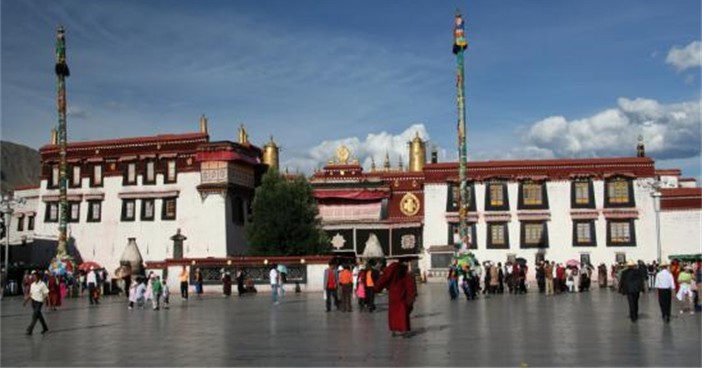
After breakfast, sightseeing tour of Jokhang Temple is situated in the heart of old Lhasa, it houses Tibet’s most precious religious relic, a golden Shakyamuni Buddha which was brought as a gift by the Chinese Princess Wen Cheng on the occasion of her wedding to the Tibetan King, SongtsenGompo.
JOKHANG dates back from the 7th century A.D. Legend says that Songtsen Gampo, who built the temple, threw his ring into the air, promising to build a temple where it landed. The ring fell into a lake and struck a rock where a white stupa miraculously appeared - an auspicious sign. Surrounding the Jokhang Temple is the bustling Barkhor market place which is the religious and social focus of Lhasa. This, the spiritual centre of Tibet, is also the heart of Lhasa.
Barkhor Kora: Surrounding the Jokhang Temple, Barkhor Street is a bustling marketplace and a popular pilgrimage circuit. Stroll along the vibrant street, browse through shops selling traditional Tibetan goods, and soak in the lively atmosphere. It's a great place to buy Tibetan handicrafts, prayer flags, and other souvenirs.
After the Completion of Kora, back to Hotel.
PM: VISIT NORBULINGA, THE SUMMER RESIDENCE OF THE DALAI LAMA.
Norbulingka at the southwest of Potala Palace is listed as the "World Cultural Heritage Site" and "National AAAA Scenic Spot". First built during the 1740 s by the 7th Dalai Lama, Norbulingka, meaning the "Park of Treasure", is also called Norbulingka Palace, The Norbulingka Park and the Precious Stone Garden. Norbulingka is reputed as "Plateau Botanic Garden" as well as the "Summer Palace in Lhasa", because it is a warm growing paradise for more than 100 rare species of rare plants from Himalaya and all over the world within its 3.6 million square meters wide area. More than that, it is a superb place to visit the featured Tibetan Buddhist buildings, since this is the garden with the most exquisite constructions in Tibet. Furthermore, it is like a "Museum of Treasure" where you can admire numerous valuable historical relics and artistic pieces for over hundreds of years. As a result, you will find Norbulingka a nice attraction with rich Tibetan culture and gorgeous garden charm.
Dinner and Overnight at the Hotel
After breakfast, proceed for the sightseeing tour of Potala Palace.
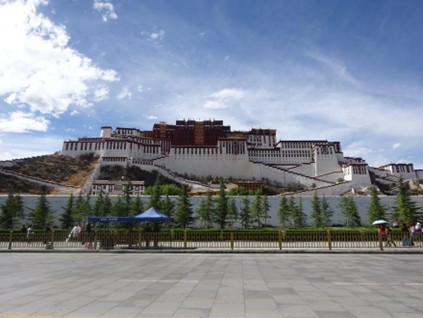
Potala Palace: this architectural wonder - a spectacular edifice whose gold roofs soar high above the town and rise more than 300 meters above the valley floor and can be seen from all directions for miles around. The Potala Palace was built mainly during the Fifth Dalai Lama's reign in 1645-1693 and remained the centre of political and religious power for the Dalai Lamas until the 14th.
With over 1000 rooms, it contains the living quarters of the Dalai Lamas and their magnificent golden tombs after their death. Regents, tutors and other high lamas had apartments in the palace too. The Potala held the offices of government, a huge printing house and a seminary run by the elite order of monks who surrounded the God-King to train government officials. Hundreds of elaborately decorated chapels and shrines, halls and corridors contain thousands of gilded statues - Tibet's pantheon of Buddhas, Boddisattvas, saints and demons.
Today the Potala is a statue museum with 35 caretaker monks, but to thousands of Tibetan pilgrims, it remains a beloved shrine.
After the sightseeing tour of Potala Palace, visit Drepung Monastery & Sera Monastery.
Drepung Monastery: Another significant monastery near Lhasa is Drepung Monastery, which was once the largest monastery in Tibet. Explore its grand halls, visit the assembly hall, and witness the daily rituals of the resident monks. The monastery offers panoramic views of the Lhasa Valley.
After the tour, drive back to Hotel.
Dinner and Overnight at the Hotel
Gyantse is a pastoral town between Lhasa and Shigatse. It is 264 km Southwest of Lhasa (total 8 hrs drive). It still retains the charm of a traditional Tibetan town untouched by modern expansion. It made world headlines in 1904 when Colonel Young Husband, who led British Expedition to Tibet, defeated the Tibetan army there. As a cross-road on the principle trade route to India, it used to be renowned for the excellence of its carpets. The compound, encircled by an impressive wall, once contained 19 Monasteries, presided over by the still intact fortress perched atop a nearby mountain.
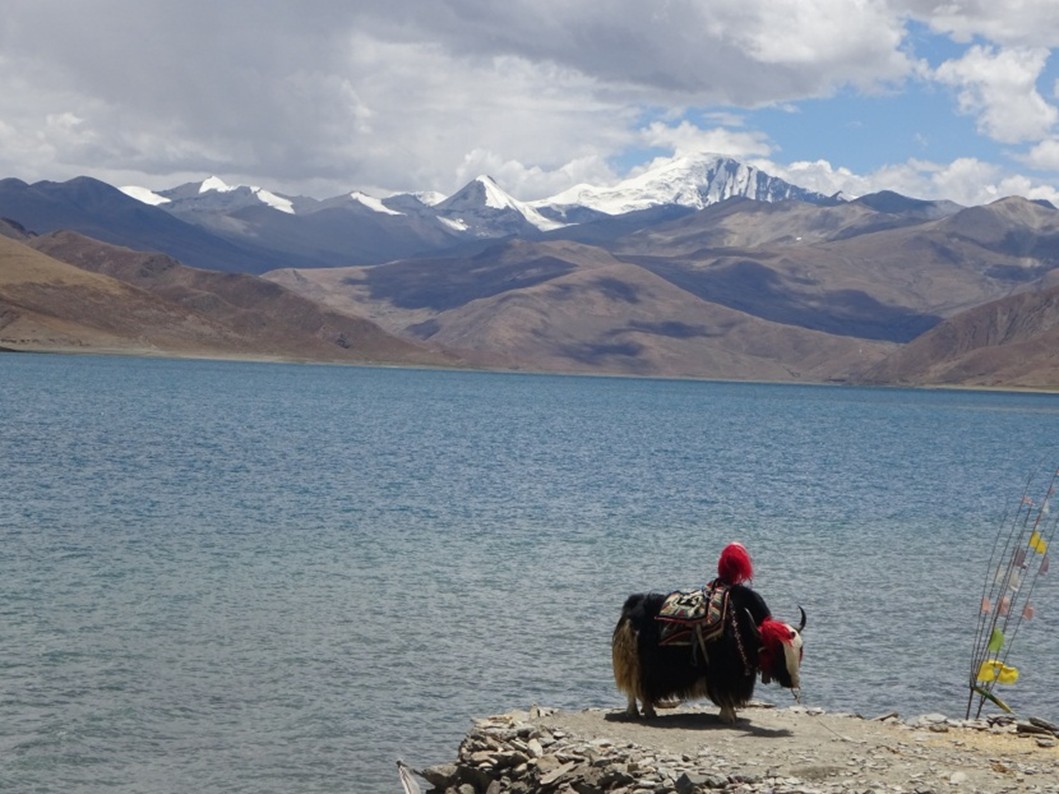
As you depart from Lhasa and head towards Gyantse. En-route, you'll pass by Yamdrok Lake, one of Tibet's sacred lakes known for its turquoise waters and breathtaking scenery. Then drive along the picturesque trail of the colorful Lake Yamdrok, the Tibetan lifeline of the river Brahma Putra (Yarlung Tsangpo). Yamdrok Tso or Turquoise Lake is a lake of a glaring blue that radiates a near mystical charm. It is about 240 kms in circumference and is more like an Island sea. There are Yak herders around and the lake itself supports a population of scale less fish in its non-saline waters. Take some time to enjoy the views and take photos.
After the break, proceed on the journey and stop at Karola Glacier, located on the way to Gyantse. Witness the stunning glacier and capture memorable pictures.
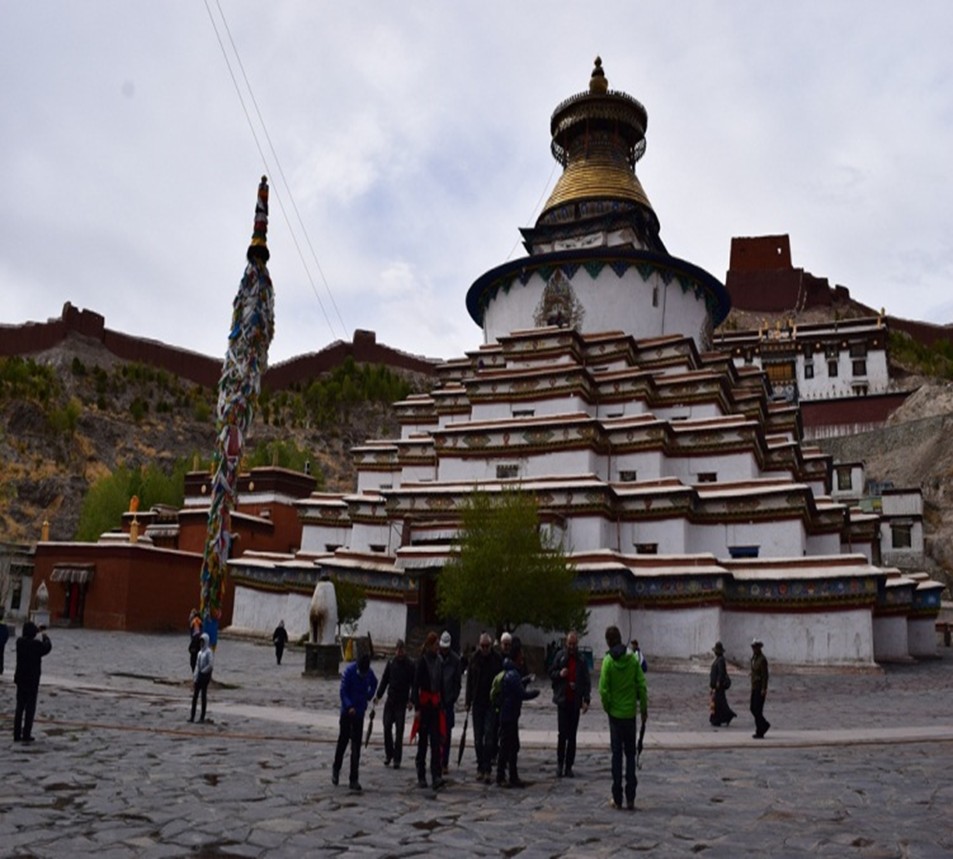
PM: VISIT Gyantse Kumbum, one of the most unique and magnificent buildings in Tibet consisting of 6 storeys complete with a Buddhists Hall and a prayer hall. It has 112 chapels and its walls are adorned with religious paintings. Built in the 15th century, it has withstood all battles and revolutions since. We also visit the Pelkhor Chode Monastery located near the Khumbum, it was founded in the 15th century. It has been remarkably well preserved and many of the statues and paintings inside it date back to the time of its founding.
Drive Gyanste to Shigaste the second-largest city in Tibet.
Upon arrival at Shigaste, check into Hotel.
Overnight at the Hotel
AM”: Visit Tashilhunpo Monastery founded in 1447 AD by Gendun Drup, the first Dalai Lama. It is the seat of the Panchen Lama who is second to the Dalai Lama in Tibetan Buddhist Hierarchy. The 5th Dalai Lama in declared that his teacher, then the Abbot of Tashilhunpo, who a manifestation of the Buddha Amitabha and the Panchen Rinpochhe. Tashilhunpo has one of the world’s largest status - a 9 storied gilded bronze statue of Maitreiya, the future Buddha.
After sightseeing tour, begin your journey from Shigaste to Shegar (also known as New Tingri). Enjoy the scenic drive as you make your way through the beautiful landscapes of Tibet. Marvel at the vast plains, rolling hills, and distant mountain ranges.
Continue the Drive from the lunch spot, and enjoy the changing scenery as you travel deeper into the Tibetan countryside.
Arrive in Shegar, a small town located at the base of the Himalayas. Check into your hotel and take some time to relax.
Shegar is surrounded by mountains and is another town that lies in the shadow of a great fortress. Even in ruins it is majestic. Seeming to grow out of the craggy brown rock, its sinuous wall bristles with watchtowers like stegosaurus spines. Isolated in 1855 by marauding Nepalese in search of booty, the Gurkhas cut off the dzong’s water supply and settled in for a long siege. Shegar proper has little to recommend except the highest post office in China.
Overnight at the Hotel
From Shegar, set out for Rongbuk and arrive at the army check post and then in another 4 kilometers, leave the main highway and enter the Quomolongma National Park. This will be a long day’s drive. After the permits and purchase of National Park entrances tickets and once again drive for about 2 kilometers to arrive at another check post which is operated by the Quomolongma National Park and is the gateway into the Quomolongma (Everest National Park). Here it is mandatory to present all the National Park entry permits for clients as well as the motorbikes.
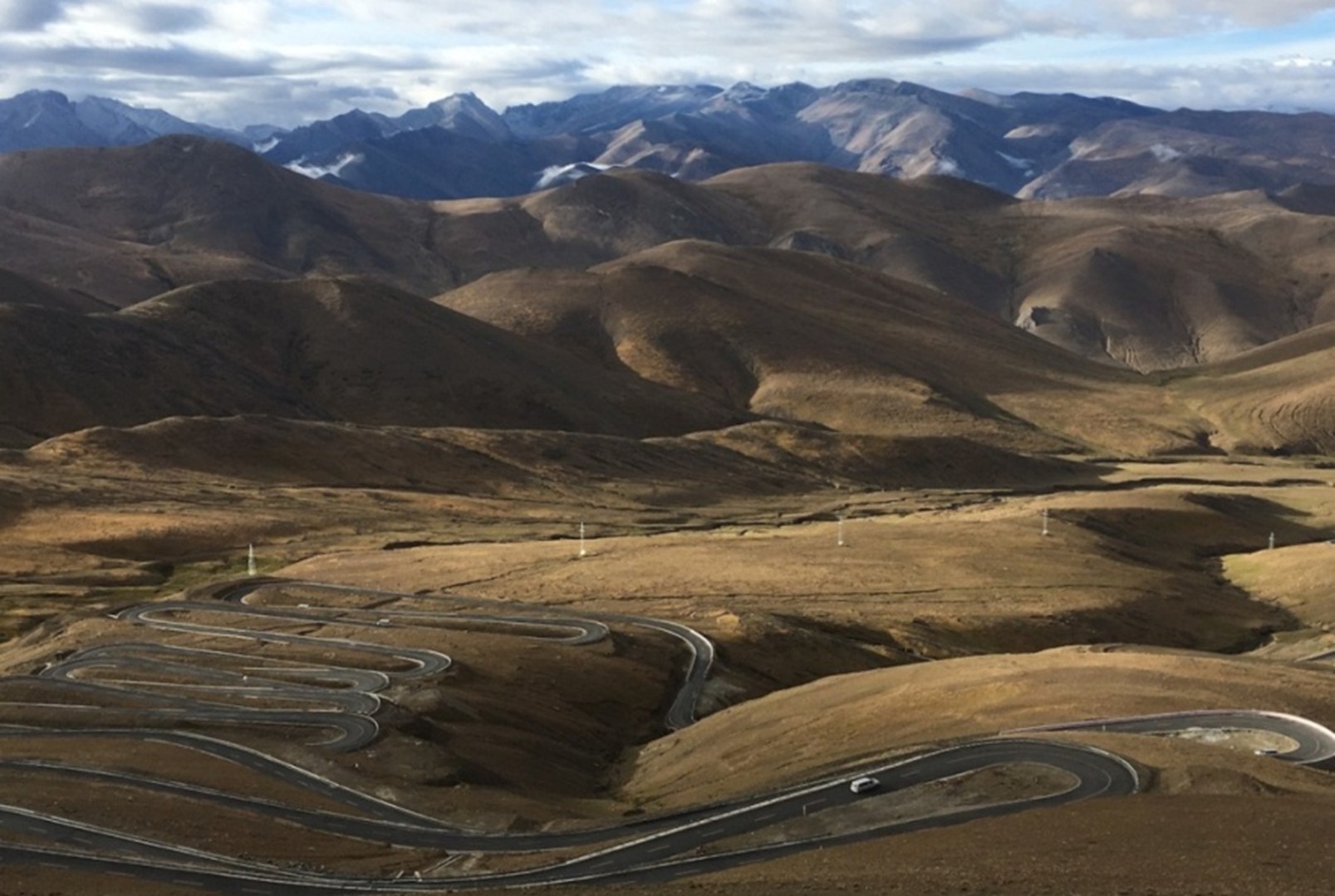
After receiving clearance, ascend on a zigzag trail to Gyawla Pass at (5200 m) which is strewed with prayer flags. A few entrepreneurs set up shop selling souvenirs, prayer flags and tea / cold drinks / can juice. Pilgrims purchase these prayer flags and after writing the names of the family members stretch them along the hillsides. It is believed that as the wind flutters the flags, their prayers reach heaven. Weather permitting; there are great views of Mt. Makalu, Mt, Everest (Quomolongma), Cho Oyu and others.
After a stop to view the Himalayas, descend once again zigzagging our way on 100 switchbacks all the way to the valley floor and then drive towards the settlement of TashiDzom.
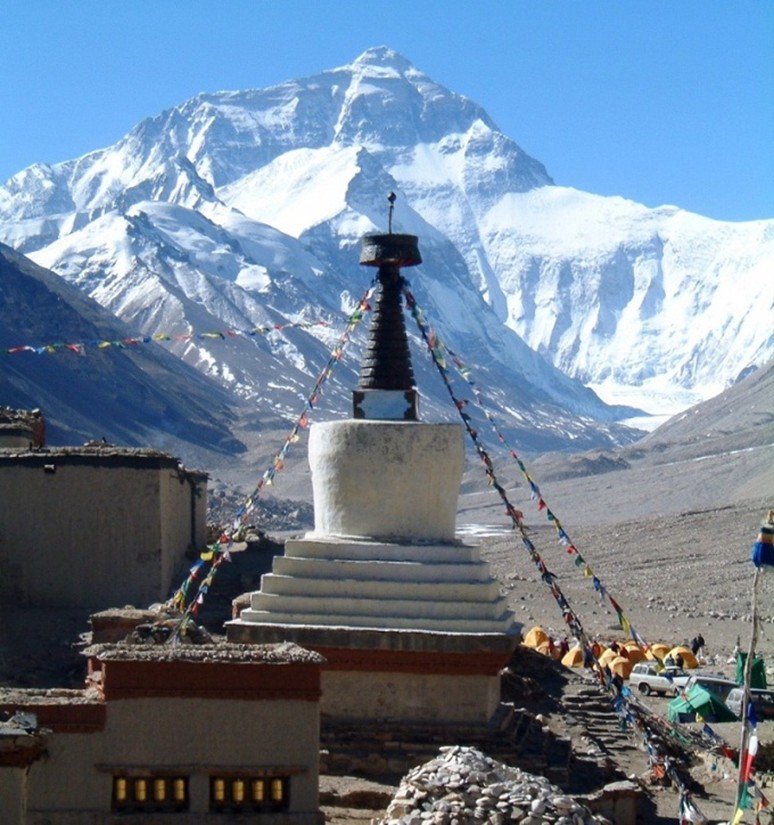
Upon arrival at Tashi Dzom, Park your Motorbike carry the necessary things that are required & board the waiting electric bus for the 45-kilometer drive to Rongbuk following the Drakar Chu (River) and making slow but steady ascent. After a while, the views of Mt. Everest loom over us and as we a turn bend, we suddenly arrive at Rongbuk and the Lodges. In the distance, towering above everything else is the magnificent and awe-inspiring view of Mt. Everest – Mother of the Earth at 8848 m. Following a close second is the Rongbuk Monastery with its Massive Chorten and ancient monastery.
Upon Arrival at Rongbuk, spend some time at the tented city for a cup of tea/ noodle soup or shop for souvenirs or even send a post card from the mobile post office which is considered to be the highest post office in the world at 5200m.
VISIT RONGBUK MONASTERY
Rongbuk Monastery was established around the early 20th Century and is considered to be the highest monastery in the world. It is governed under the Nyingmapa Sect (one of the 4 major sects of Buddhism). The Rongbuk Valley is known as the “sanctuary of the birds” and there is a strict ban on killing any animal in the area. There are herds of Blue sheep that dot the hillside as well as the road side and sometimes also come down to the monastery.
The monastery was razed in the 1960s by a fire and rebuilding took place at Rongbuk Monastery in the late 1980s and early 1990. The monastery has now been resurrected, along with the stupa that figures prominently in tourist photography of the scene. In Rongbuk Monastery, some of the murals are superb. The monastery and its large chorten make a great photograph with Mount Everest thrusting its head skyward in the background.
Dinner and Overnight at Guest House/Hotel
After Breakfast, Board the Electric bus and drive back to TashiDzom.
Upon arrival at Tashi Dzom, Load the backup vehicle with your luggage & continue to the 26 kilometer marker. Leave the main road and take the small dirt track on the left leading to the river. Cross the bridge and head off with a steady climb through scattered Tibetan settlements. The road passes directly through the village and then descends steeply. On the other side of the ridge, we then start the climb through valleys with scenic views of the Tibetan landscape and fast flowing river to the highest plateau of the world. This area is still dry and dusty and has not been paved yet and allows for some entertaining off road riding.
From Thingri, our journey continues as we drive on the highest plateau of the world with typical view of the Tibetan landscape offering sheer feeling of standing on the roof of the world. As we ascend to the Lalung La (5,200m) from where, weather permitting, there is a breathtaking panorama of beautiful Himalayan ranges including Mt. Everest (8,848.48m) but is dwarfed by the vastness of the Tibetan plateau.
Leave the friendship Highway, Turn right at the cross road then drive through the desolate plain of Digur Tang with its enormous sand dunes and the snowcapped peaks of Shishapangma (8012m.) and Langtang (7232m.) in close proximity to the south. Leaving the Bum- Chu basin we descend towards Pelkhu Tso (4600m.) a stunningly beautiful lake into which the glacial streams of Da-Chu and Lha-Chu drain.
Then ascend steeply to the Guntung La (5236m) and ascend towards Saga.
Dinner and overnight at the Hotel
After Breakfast, Set out for the drive from Saga to Darchen (495 kms) via Dzongba. This 450-kilometer journey is long but the landscape is interesting. The road passes through a few high mountains passes (Mayum la pass (5151m) and sand dunes that is made from the shifting of the sands from the Gobi Desert. Groups of wild Ass “Kiyang” and antelopes, the Tibetan Wolf as well as hares and marmots are seen roaming in this vast open arid desert plains.
Darchen is the starting point for the pilgrimages in this area and many pilgrims pitch their tents here.
Dinner and overnight at the Hotel
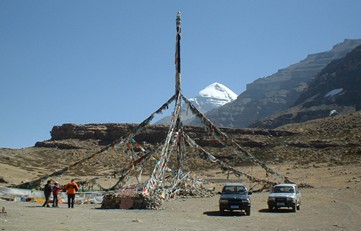
After Breakfast, set out by heading west from the enclosed compound of Darchen Leaving behind the village high above the Barkha plain to the Lha Chu valley and arrive at Tarboche, tall pole adorned with prayer flags are replaced annually during the Saka Dawa festival on Buddha’s birthday, the full moon day during the Tibetan month of May / June.
Since this Full Moon is extra special as it falls in the Year of the Horse. Buddist Pilgrims believe that a single KORA or PRIKRAMA done in the Year of the Horse is equivalent to 12 times in a normal year. Therefore there will be close to 500,000 – 600,000 Tibetan pilgrims from all over Tibet congregating for this special occasion. The festivities last for the first half of the day and once the rites are completed, all pilgrims set out for a circumambulation of this holy mountain. Since there will be a mad rush, we shall visit the take the rest of the afternoon visiting the nearby holy places.
Nearby is the Chorten – Kang – ni. It is considered an auspicious act to pass through the small archway formed by the two legs of this Chorten. The trail continues across the plain to Shersong and after about 30 minutes to arrive at the bridge leading to the Nyanri Gompa, perched high on the hillside above. All the monasteries on the Kailash circuit were destroyed during the Cultural Revolution. Nyanri Gompa also known as the Chhuku Gompa because of the image of Chhuku Rimpoche it’s houses was the first to be rebuilt and contains a few treasures that were rescued from the original gompas.
Later drive to the view Point of Rakshas Lake and Manasarovar Lake.
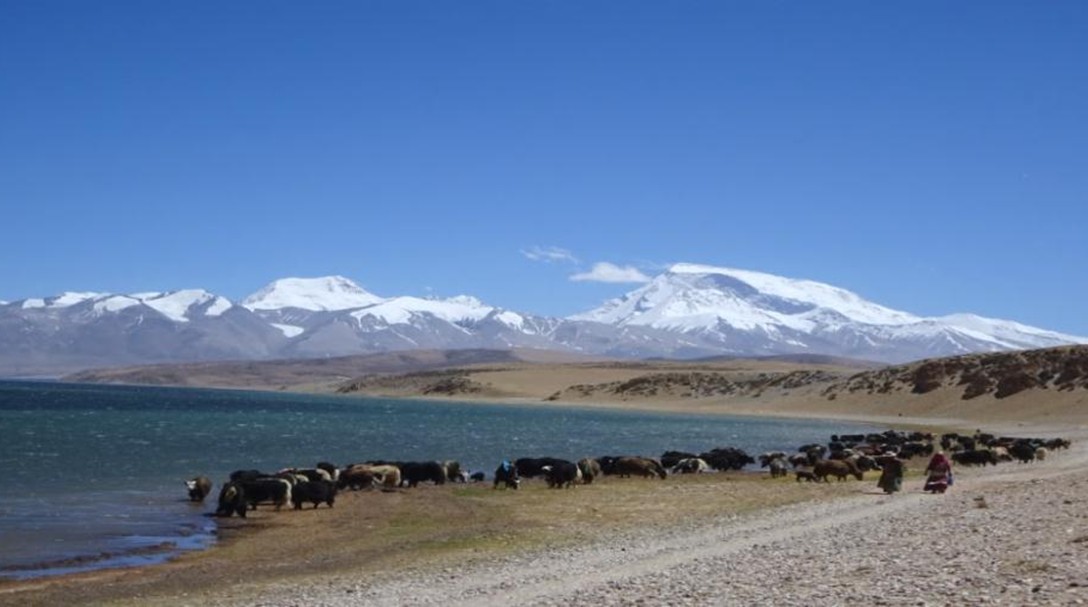
The Lake Manasarovar, Hindus believe, was created by Brahma as reflection of the depth of his soul-manas and represents the female energy of Yoni of the Universe, while Mt. Kailsah symbolizes the male energy of the Lingum. At 14459 ft. Lake Manasarovar is the highest body of fresh water in the world. Holy to Buddhists alike, it was once surrounded by 8 monasteries. Buddhist believes in Queen Maya, Buddha's mother was carried here by the gods and some of Mahatma Gandhi's ash was carried here from India and scattered in the Lake.
After spending some time in Rakas Tal View point and in Lake Mansarovar, we drive back to Darchen.
Overnight at the Guest House
After Breakfast, board the bus for the 1 ½ hour drive to Tarboche at 4730 M. It is a marker with a tall pole adorned with prayer flags. The Flag pole is replaced every year during Saka Dawa (The full moon at the time of the birth of Buddha which generally falls in May.
A bus station is set up here to assist transport tourists and pilgrims. Upon arrival, meet waiting Yaks and after sorting out the loads, proceed on the circumambulation / Kora of Mt. Kailash.
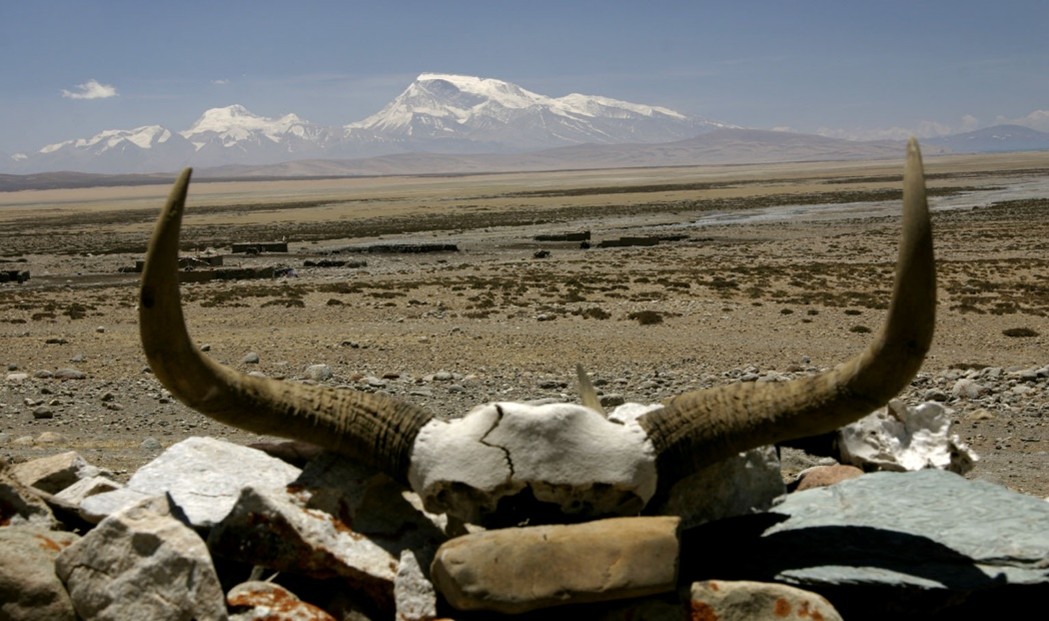
It is the most sacred mountain in Asia and is believed to be the physical embodiment of the mythical Mount Meru, said to be the center of the universe or ‘navel of the world’. Mt. Meru is often depicted as a mandala and its image occurs throughout Buddhist and Hindu parts of Asia. Images of Mt. Meru occur as far away as Angkor Wat in Cambodia and Borobadur in Indonesia. The circumambulation of Mt. Kailash (6714 m /22,028 feet) is an important pilgrimage for religions. To Hindus, Kailash is the abode of Shiva, Tibetans call it Kang Rimpoche; Jains worship it as Mt. Asthapada, the peak from which the religion founder, Rishabanatha achieved spiritual liberation. Followers of Bon – Po, the ancient pre – Buddhist shamanistic religion of Tibet revere Kailash as the soul of Tibet. The circumambulation to the Hindus and Jains is known as Parikrama and Buddhists call it Kora. Tibetans often make the 52-kilometer circuit in a single day but the Indian Yatrees do it in three but this is also rushed.
Note 1: The full Parikrama starts by heading west from the enclosed compound of Darchen leaving behind the village high above the Barkha plain and after 1 ½ Hrs. climb up to a series of prayer flags at 4730m from where you should have the first great views of Mt.Kailash. This is the first site of prostration known as Chaktsal-Gang. This is the first of the four chaktsal – gang on the Kora and offers an excellent view of the peak. Then head north up the Lha Chu valley and descend to, a tall pole adorned with prayer flags at 4750 meters.
The prayer flags are replaced annually during the Sakya dawa festival on Buddha’s birthday, the full moon day during the Tibetan month of May / June. Nearby is the Chorten – Kang – ni. It is considered an auspicious act to pass through the small archway formed by the two legs of this Chorten. The trail continues across the plain to Shersong and after about an hour arrive at the bridge leading to the Nyanri Gompa, perched high on the hillside above. All the monasteries on the Kailash circuit were destroyed during the Cultural Revolution. Nyanri Gompa also known as the Chhuku Gompa because of the image of Chhuku Rimpoche it houses was the first to be rebuilt and contains a few treasures that were rescued from the original gompas. Trek from Darchen to Chhuku Bridge – 3 Hrs. (side visit to Chhuku Monastery – 30 minutes.). However, Camping is not allowed in the Shershong area and so the pilgrims must really be fit and strong to trek from Darchen to Dhhirraphuk in a single day as it entails walking for about 7 – 8 hours.
Note 2: The regular Parikrama starts with a drive to Tarboche near Chukku Gompa, which takes about an hour. Here, met by Yaks and yak men and after packing, we start the Parikrama.
From here, the normal pilgrims route stays on the east bank of the Lha Chu but for better views of Kailash and generally better Campsites, cross the west bank trail across a scree slope to Ho and arrive at a good camping ground at Damding Donkhang (4890 m) a grassy spot that offers good views of the West face of Mt. Kailash. It is also known as the Valley of yaks as one can see hundreds of Yaks grazing on the meadows. However, we continue on further crossing the side streams Belung Chu and Dunglung Chu on rocks as the North face of Mt. Kailash comes in view.
On the opposite side of the Lha Chu, you can see several groups of nomads tending herds of goats and yaks. Pass their tents carefully like most Tibetans they keep ferocious Tibetan mastiff dogs. As one reaches the Gompa and a frugal guest house at Drira Phuk, you are rewarded with a fine view of the North face of Mt. Kailash. The three lower hills in front of Mt. Kailash from this vantage point are the manjushree, Avalokitesvara and Vajrapani representing wisdom, kindness and power. The Drira Phuk Gompa was rebuilt in 1985.
Dinner and Overnight at the Guest House
Start trek from Drira Phuk and immediately cross the Lha Chu on a wooden bridge. If one continues to trek up the Lha Chu, they would eventually reach the true source of the Indus.
This is a good campsite that will make the pass crossing easier than to have camped at Drira Phuk but it is dangerous to Camp at higher altitudes because of acclimatization The Kora route makes a serious climb on to a moraine eventually meeting the trail from the East bank. The trail now climbs more gently to a meadow full of fat marmots (phiya) at 5212m problems. The snowcovered pass to the right, the Khado Sanglam is protected by a lion faced Dakini goddess. Pilgrims may cross this difficult pass only on their auspicious 13th circuit of the mountain.
Climb past piles of clothing at Shiva-tsal (5330m) and Tibetans leave an article of clothing or a drop of blood here as part of leaving their past life behind them. Continue past thousands of small rock cairns to a large cairn at 5390 meters passing the Dikpa Karnak, sin testing stone. It is said that those without sin can squeeze through the narrow hole between the boulders while a sinner no matter how small cannot pass through.
The trail now leads across a boulder field and climbs through large rocks to a tiny stream. Climb onto a ridge and continue gently on to the Dolma La at 5630 meters.
A big boulder on the pass representing the goddess Dolma (better known by her Sanskrit name Tara) is festooned with prayer flags and streamers. It is traditional to leave and take something as part of the collection of coins, prayer flags, teeth and other offerings attached to the rock.
This is the physical and spiritual high point of the Kora. The trail from the west side of the pass is steep and rocky at first and then begins a series of switchbacks as it passes Gauri Kund, the lake of mercy and 5450 meters. Many more switchbacks and steep descents leads to the valley and then further descend for about an hour to arrive alongside the Lham Chhukhir at 5150 meters, the evenings campsite on the banks of a river near Shabje Drakthok. Shabje Drakthok has foot prints on a huge rock which pilgrims believe belong to Lord Buddha.
Overnight at the Hotel
After breakfast, Set out for the drive to Kyirong. From paryang, we head south towards Kyirong in a Lunzhu Road. We continue straight in this road until for about 64 kms near Paiku tso Lake. After then turn right towards Kyirong Town. We will be passing through the small settlements like saga, raga in our journey from Paryang to Kyirong.
Upon arrival, check in to the Hotel.
Rest of the day is free to relax.
Dinner and Overnight at the Hotel
After early breakfast, drive down 24kms to the border of Nepal and Tibet. Here we bid farewell to our Guide and driver from Tibet and complete Chinese Immigration and then cross the small makeshift bridge and enter Rasuwagadhi into Nepal.
Met by representatives from Nepal to assist and complete Nepal Customs and Immigration which take some time and we enjoy a break for tea / coffee and some Nepali / India snacks.
The drive from here is along the Pasang Lhamu highway with switch backs and dirt sections. This section of the highway is vulnerable to landslides and regular blockades during the monsoons. As we descend along the winding road, we will drive along the edge of the Langtang national park which will fall on your left. Most of the drive today will be slow and steady as this section is the major entry for goods to Kathmandu from China. We will come across big trucks and the road is just big enough for it. So giving way and waiting turns at corners and narrow stretches is time consuming.
80kms drive from the border brings us to a small town of Bidur for a lunch break. From here, its another 60kms drive to Kathmandu via Dhikure and Gurje Bhanjyang but will take about ¾ hours.
Upon arrival Kathmandu, check into the hotel.
EVE: Farewell dinner
Overnight at the Hotel, Kathmandu
After breakfast, met by representative and transferred to the airport for the onward flight home. (Reporting time is at least 3hrs before flight time)
INCLUDES
- NEPAL PORTION
- • All transfer to and from airport / hotel / airport in a private deluxe a/c vehicle accompanied by the representative from Sacred Summits (P) Ltd
- • Welcome dinner in a Typical Nepali Restaurant with transfer in a private a/c deluxe vehicle and accompanied by the representative from Sacred Summits (P) Ltd
- • Full day sightseeing tour as per the itinerary of Kathmandu city, Syambhunath Stupa, Patan Durbar Square, Bhaktapur Durbar Square and Pasupatinath Temple in a private deluxe a/c vehicle accompanied by the well experienced and knowledgeable English-speaking guide.
- • Experience English Speaking City guide fee for the sightseeing tour as per the itinerary inclusive of his daily allowance, meals and all the government taxes.
- • Entrance fee for the sightseeing tour as per the itinerary (wherever applicable).
- • Airfare for the Sector Kathmandu / Lhasa of USD 450.00/person (Subject to change)
- • Airfare for the Sector Kathmandu / Lhasa for Escort from Sacred Summits (P) Ltd.
- • 05 nights stay at the Kathmandu Guest House in Kathmandu on twin sharing basis in a category of Premium Deluxe Room inclusive of Bed and Breakfast and all applicable taxes.
- • Farewell Dinner in a restaurant near by the Hotel.
- • All Government taxes
- TIBET PORTION
- • Visa Fee for Tibet of USD 120.00.00 (process which takes two working days) per person for all nationals except US nationals (US nationals need to pay an additional USD 120.00) (Visa fees are subject to change without notice)
- • Overnight accommodations on 4 stars hotel with daily breakfast on Twin Sharing basis; Lhasa Saikang Hotel, Shigatse Gesar Hotel, Shegar Everest Hotel, EBC Rongpuk hotel,Saga Sherry Grand Hotel, Dharchen E-Hao Hotel,Dirapuk Guest House, Zhutulpuk Guest House, Paryang Himalaya Hotel, Kyirong Qomolanzom Hotel
- • All expenses for the English-Speaking Escort from Sacred Summits (P) including his allowances, airfare, accommodation and all meals.
- • All necessary Tibet travel permits
- • A good local English-speaking Tibetan tour guide
- • All monastery entrance fees during sightseeing tours
- • Electric bus ride from Chuzom / Rongbuk Monastery / Chuzom (as per the itinerary).
- • A Govt License Vehicle - Hyundai Bus throughout the trip in Tibet
- • One oxygen cylinder 10litre
- • All major meals (lunch and dinner) throughout the entire trip at the hotels and Guesthouses OR at local restaurants on en-route stopovers as per the itinerary.
- • Comprehensive medical kit.
EXCLUDES
- NEPAL PORTION
- • International Airfares.
- • Nepal Visa fees (If applicable).
- • Personal Insurance
- • Covid Related all Travel Insurance and PCR Check-up cost
- • Meals (Lunch & Dinner) while the guest stay at hotels in Kathmandu
- • Items of a personal nature such as bar bills telephone calls, laundry, extra mileage and any extra costs incurred due to natural calamities, flight delays etc.
- • Personal medication
- • Insurance for or against accidents, loss of life, theft etc.
- • Personal insurance, evacuation and medical expenses.
- • Tips for the Guide, Road Captain, Mechanic, Hotel Staffs etc on tour.
- • Costs incurred due to cancellation of flights, altitude sickness or unforeseen circumstances (riots, natural calamities etc) and situations beyond the control of Moto Himalaya Tours & Travels (P) Ltd and its associates.
- • Any item not mentioned in the above ‘cost includes’.
- TIBET PORTION
- • Supplement for TIBET visa for US nationals of USD 120.00 per person
- • Porter to carry luggage for the Kora around Kailash Trek
- • Personal insurance and evacuation.
- • Flight delays or cancellation due to adverse weather condition.
- • Photography charges for Still and Video cameras inside monasteries.
- • Items of a personal nature such as bar bills, alcoholic beverages, bottled -drinks and mineral water, extra mileage, etc.
- • Personal gratuities such as tips to Road captain, mechanic, hotel staff, guides and drivers etc.
- • FINE for venturing into prohibited area
- • Oxygen and Mineral water
- • Covid test fee and Quarantine fee if needed
- • Costs incurred due to natural calamities, strikes, breakdowns and beyond the control of Moto Himalaya Tours & Travels (P) Ltd and its associates.
- • Items not mentioned in the cost includes