
DRUK PATH TREK
Bhutan is purely a Buddhist Himalayan Kingdom that is unsurpassed in its scenic majesty and vibrant culture. The kingdom shares with Nepal the world’s greatest concentration of Mountains and living heritage of Buddhism.
Bhutan is blessed with numerous varieties of plants & animals as 72% of its land is covered by forest. There are 5,400 varieties of plants which includes 300 varieties of medicinal plants, and 46 varieties of rhododendrons. Spring (Mid March – Mid May) is one of the best times as the days are warm, bright and sunny with clear view of the snowcapped mountains. The flowers are in full bloom and the forests are ablaze with magnolias, wild orchids and Rhododendrons.
90 mammals and over 770 species of birds have been recorded in Bhutan so far. These include the illusive and endangered snow leopard, blue sheep, red panda; the Royal Bengal tiger, The Takin, marmot, musk deer etc and birds like black-necked cranes, white bellied heron, horn-bills and pheasants live a very protected life.
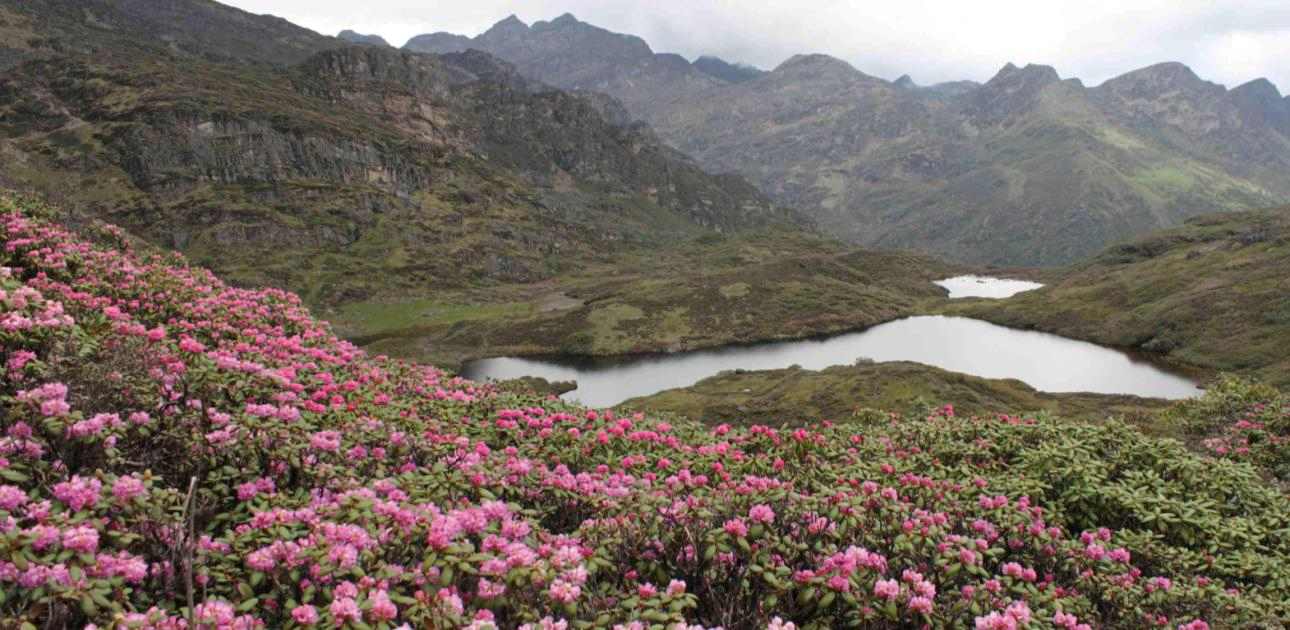
The Druk Path Trek is the most popular trek in the country. This 4/5 or 6 Day trek passes through a gorgeous natural landscape of blue pine forests, high ridges and pristine lakes while at the same time offering the opportunity to visit some ancient Lhakhangs, dzongs and villages. Part of this trek follows the route between Paro and Thimphu, crossing the chain of mountains that separates the two valleys. The route is sparsely inhabited by nomadic yak herders but there are wonderful lakes teeming with fish. The trail traverses through forests of fir, blue pine and dwarf rhododendrons at altitudes ranging between 2400-4200 m and the area is well known for spectacular rhododendron forests which bloom in March & May. In the clear weather of late autumn and winter, great views of the Himalayas are seen as the most part of this trek is along the ridge. On the third day hikers will arrive at Jimiling Lake, whose crystal-clear waters are home to gigantic trout.
This trek also offers hikers stunning views of Mt. Gangkar Puensum, the highest un scaled peak in the world. The best times to embark on the Druk Path Trek are between March-June & September-November.
Skeleton Itinarary
Day 01: Arrive Paro. Upon arrival meet and transfer to Hotel.
Overnight at the Hotel
Day 02: Sightseeing tour of Paro Valley
Overnight at the Hotel
Day 03: Drive Paro to Thimphu (2334m/55km/1hrs)
Overnight at the Hotel
Day 04: Sightseeing of Thimpu
Overnight at the Hotel
Day 05: Drive to Punakha (1242m/77km/2-3 hrs)
PM: Sightseeing tour of Punakha
Overnight at the Hotel
Day 06: Drive Punakha to Paro
Upon arrival at Paro, Start trek to Jili dzong
Dinner and Overnight at Camp
Day 07: Trek Jili Dzong to Jangchulakha
Dinner & Overnight at Camp
Day 08: Trek Jangchulakha to Jimilhang Tsho
Dinner and Overnight at Camp
Day 09: Trek Jimilhang to Simkota
Dinner & Overnight at Camp
Day 10: Trek Simkota to Phajodhing
Dinner & Overnight at Camp
Day 11: After breakfast hike down to the roadhead (3 hours) and then bid farewell to the trek team and board the waiting vehicle for the 2 hours drive to Paro
Dinner & Overnight at the Hotel
Day 12: Hike to Taksang
EVE: Hot stone bath and diner at the Farm House.
Overnight at the Hotel
Day 13: Transfer to airport for onward flight
Upon arrival at Paro Airport, meet our representative and transfer to the hotel.
At the hotel lobby there will be a short briefing about the trek/tour and later the guest can retire to the allocated rooms for much deserved shower and rest.
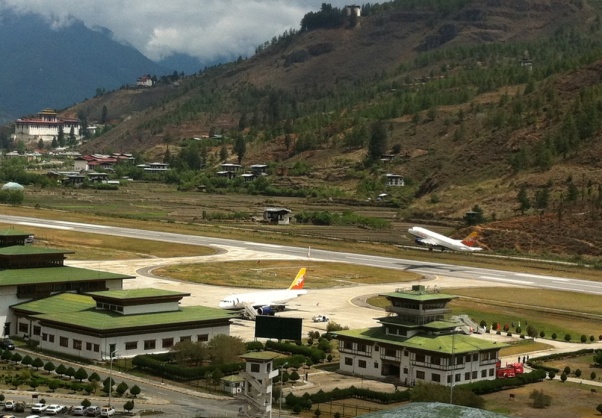
Paro valley is one of the most populated areas of whole country and because of its proximity to the airport, there are many hotels and tourist facilities that have been established close to the airstrip. The valley of Paro contains a wealth of attractions and requires a few days to be properly explored.
Rest of the day is FREE
Dinner and Overnight at the hotel
The Paro valley is one of the most populated areas of whole country and because of its proximity to the airport, there are many hotels and tourist facilities that have been established close to the airstrip. The valley of Paro contains a wealth of attractions and requires a few days to be properly explored.
Lunch at the Hotel.
After lunch, sightseeing of Ta Dzong, the National Museum housed in an ancient watchtower, which has a fine collection of ancient Thangka painting, textiles, weapons and artifact offering a great orientation into Bhutan’s historical, cultural, and religious past.
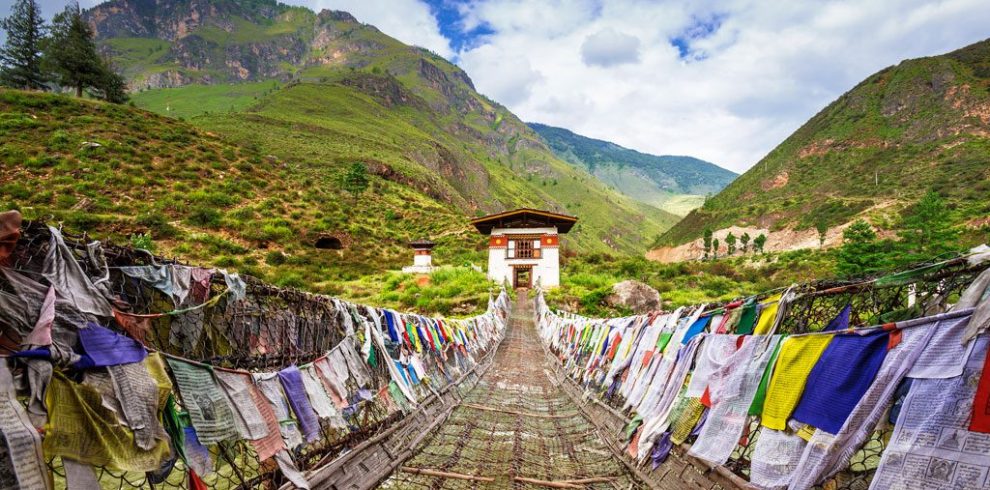
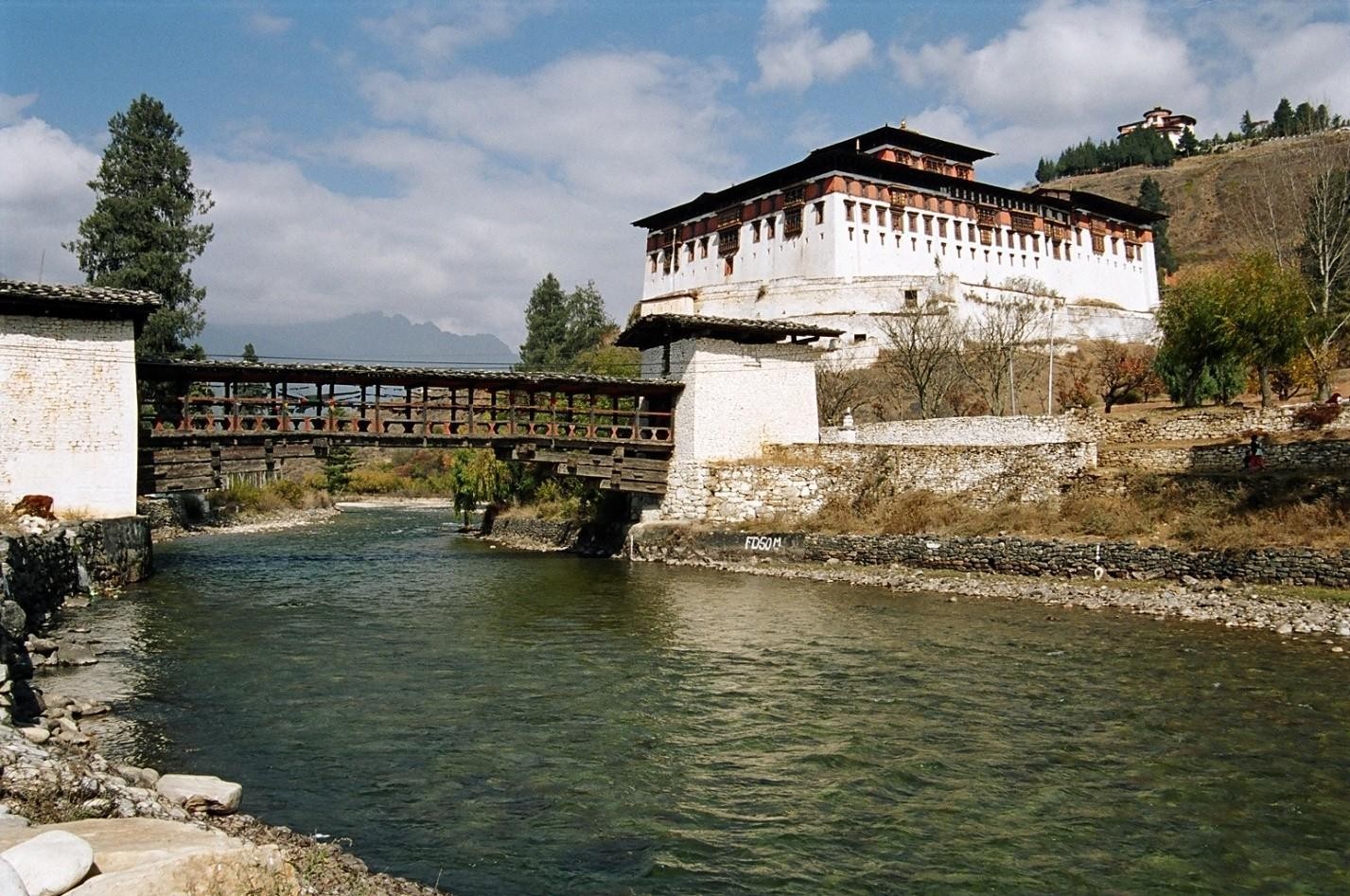
Then descend to the Rinchen Pong Dzong. This massive fortress is approached by a gently sloping flagstone road and a beautiful wooden bridge roofed with shingles and abutted by two guard houses. These days, The Dzong is the Administrative seat of the district of Paro and it also contains a state monastic community of about 200 monks. The central tower (Utse) of the Dzong is one of the most beautiful in Bhutan with its superb woodwork. The Dzong was built in 1645 A.D.
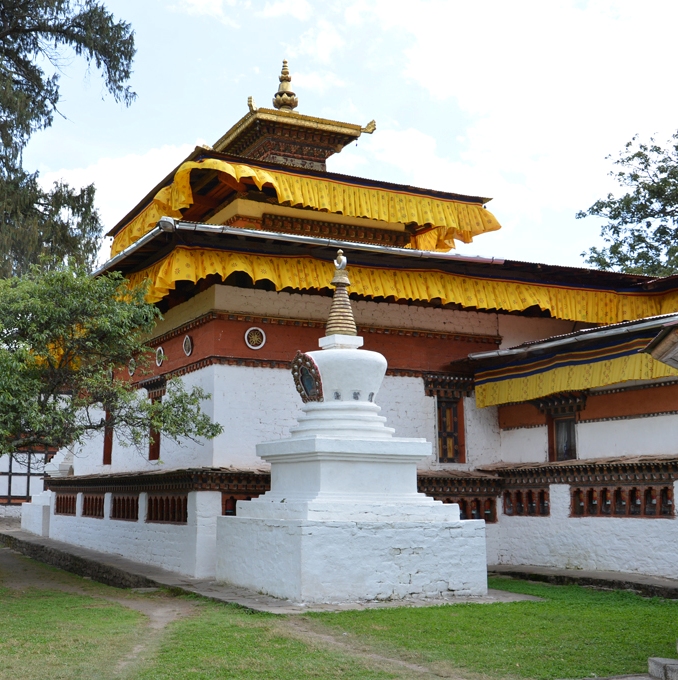
Later visit Kyichu Lhakhang, one of Bhutan's oldest and most beautiful temples. The temple is popularly believed to have been built in 659 by King Songtsen Gampo of Tibet, to pin down the left foot of a giant ogress who was thwarting the establishment of Buddhism in Tibet. As one enters the intimate inner courtyard, there is a mural to the right of the doorway of King Gesar of Ling, the popular Tibetan warrior-king, whose epic poem is said to be the worlds longest. Ashi Kesang Wangchuck the third King’s wife, sponsored the construction of the Guru Lhakhang in 1968. It contains a 5m-high statue of Guru Rinpoche and another of Kurukulla (Red Tara), holding a bow and arrow made of flowers. The inner hall of the main Jowo Lhakhang houses an original 7th-century statue of Jowo Sakyamuni, said to have been cast at the same time as the famous statue in Lhasa.
Rest of the day is free to browse through the Bazaars of Paro.
Dinner & Overnight at the Hotel
After Breakfast board to vehicle then drive 1 hours to Thimpu.
Upon arrival at Thimpu, Check into Hotel.
Thimpu is the capital city & has a population of 45,000. It is, perhaps the most unusual capital city in the world with its bustling town on the banks of its own river and set gloriously in the hills of its own valley. A regal town, Thimphu is home to the revered Bhutanese Royal family and to several foreign missions and development projects.
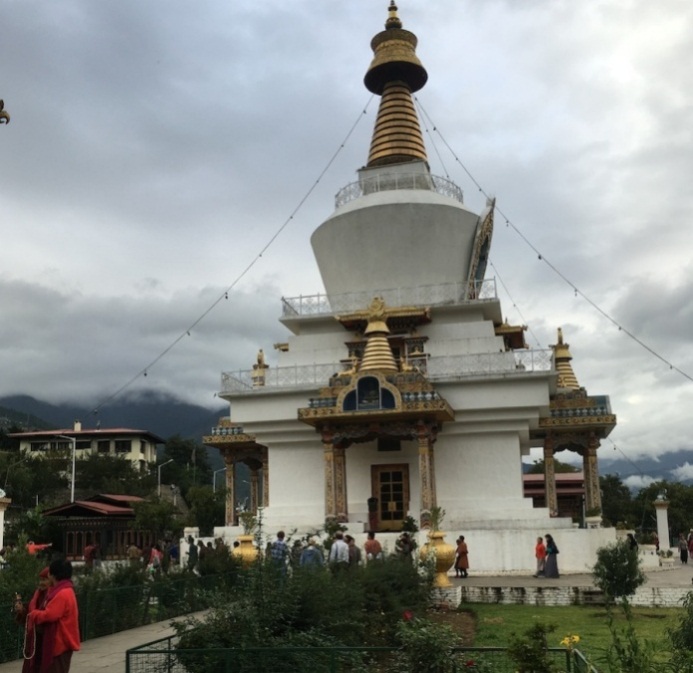
Later, proceed for the sightseeing tour of Thimpu with a visit to the National Memorial Chorten also known as Dodrul Chorten. This iconic landmark was envisaged by the third king, His Majesty Jigme Dorji Wangchuck, as a monument to world peace and prosperity.
Completed in 1974 after his untimely death, it is both a memorial to the Late King ("the father of modern Bhutan") and a monument to world peace. The paintings and statues inside the monument provide a deep insight into Buddhist philosophy.
Then, visit Taschichho Dzong, the main secretariat building which houses the office and throne room of His Majesty, the king of Bhutan and it is the country’s administrative headquarters as well as the legislative body. The National Assembly lies deep in the valley in all its grandeur.
Dinner & Overnight at the Hotel
After breakfast, drive for about 12 km north of Thimphu where the road ends at a parking lot. The trail to Tango Monastery is a climb of 280 m and takes about a little more than an hour to reach it. The walk is through beautiful forests and is an excellent place for bird watching. From the top, it commands good views of the valley. The Tango monastery is located at an altitude of 8500 meters and was built by Lama Gyalwa Lhanampa in the 12th Century and the present building was built in the 15th century by the Divine Madman, Lama Drukpa Kunley. History states that in 1616 The Shabdrung Nawang Namgyal visited Tango and meditated in a cave near the goenpa. His meditations helped ensure the defeat of the invading Tibetan army and the head lama, a descendent of Lakpa Drukpa Kunley presented the goenpa to him who carved the sandal wood statue of Chenrezig and installed in the monastery. After the sightseeing return back to the Hotel
EVE: Drive to the Doderma Stupa.
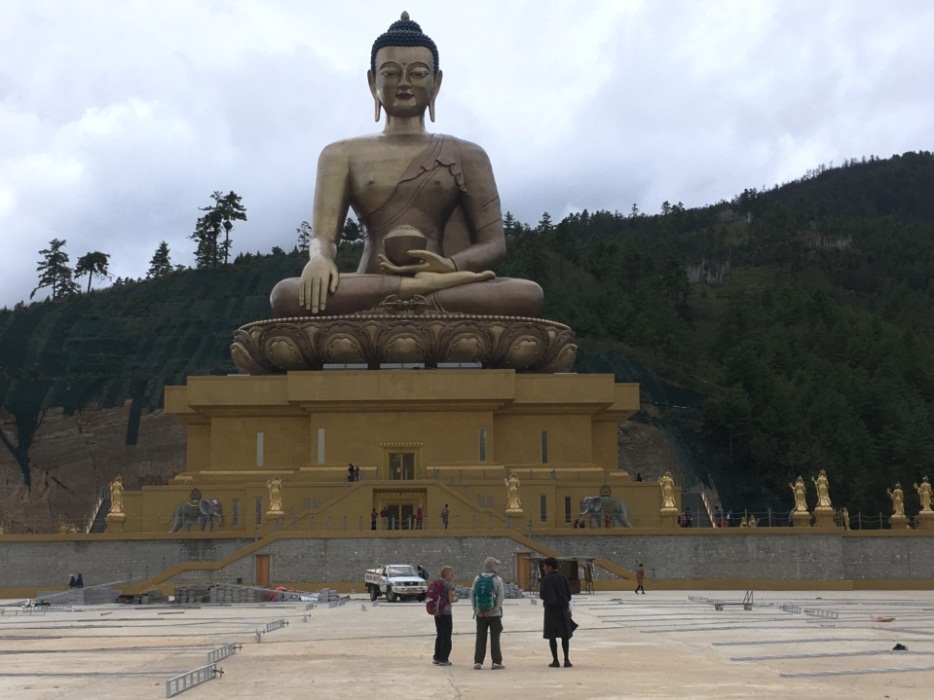
Bhutan has the largest and tallest statue of Lord Buddha and will perhaps become the eighth wonder of the world. The 169ft (51m) bronze Buddha Dorderma, symbolizing indestructibility, is erected at Changi Kunsel Phodrang overlooking the capital city, Thimphu. This project is initiated by His Eminence Trizin Tsering Rinpoche.
The statue accommodates 100,000 statues of eight-inch and 25,000 statues of twelve-inch Buddha Dordenma, made of copper and glided in gold. It is placed in a multi-layered grid boxes. The names of sponsors are inscribed separately on copper plates and displayed in the meditation hall. The well- being of future generations is dependent on the kindness and compassion of the present sponsors and Buddha makers. This project is expected to benefit self and all sentient beings. From here one can see the mountains (weather permitting) and the valley of Thimpu spread out below.
Later return to the hotel.
Dinner & overnight at the Hotel
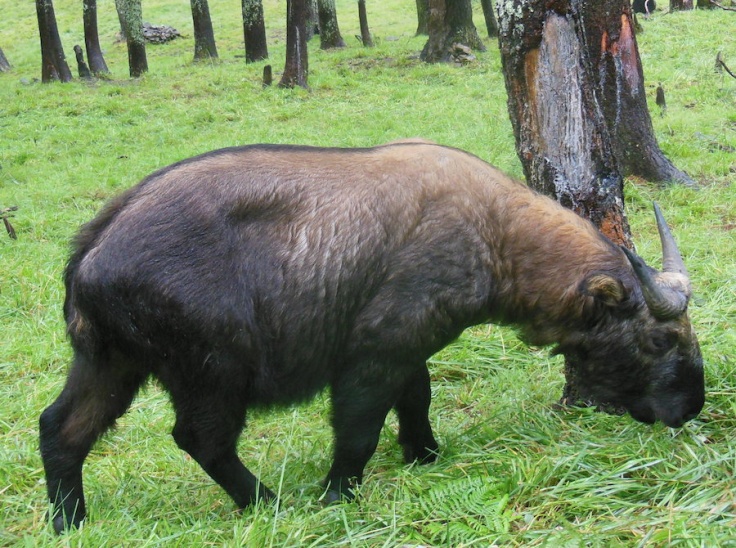
After breakfast, check out of the hotel and set out to visit the Motithang mini zoo to see the rare “Takin”, national animal of Bhutan. It is also called Gnu Goat OR Cattle Chamois and found in the eastern Himalayas in forested valleys to rocky, grass-covered alpine zones, at altitudes between 1,000 and 4,500 m above sea level. Takin feed in the early morning and late afternoon, grazing on a variety of leaves and grasses, as well as bamboo shoots and flowers. They have been observed standing on their hind legs to feed on leaves over 3.1 m (10 ft) high. Salt is also an important part of their diets.
Continue past Thimpu by driving on the road that climbs steeply through a forest of pine and cedar, festooned with hanging lichen high up near the Dochula pass (3,050 m), the place of 108 Chortens. This pass often offers panoramic views of the Himalayan mountain ranges and an ideal vantage point to view the mountains (weather permitting).
Later descend to the warmer Lobesa valley also known as Punakha, the former capital of Bhutan is located at 10,000 feet. Upon arrival, check into the Hotel.
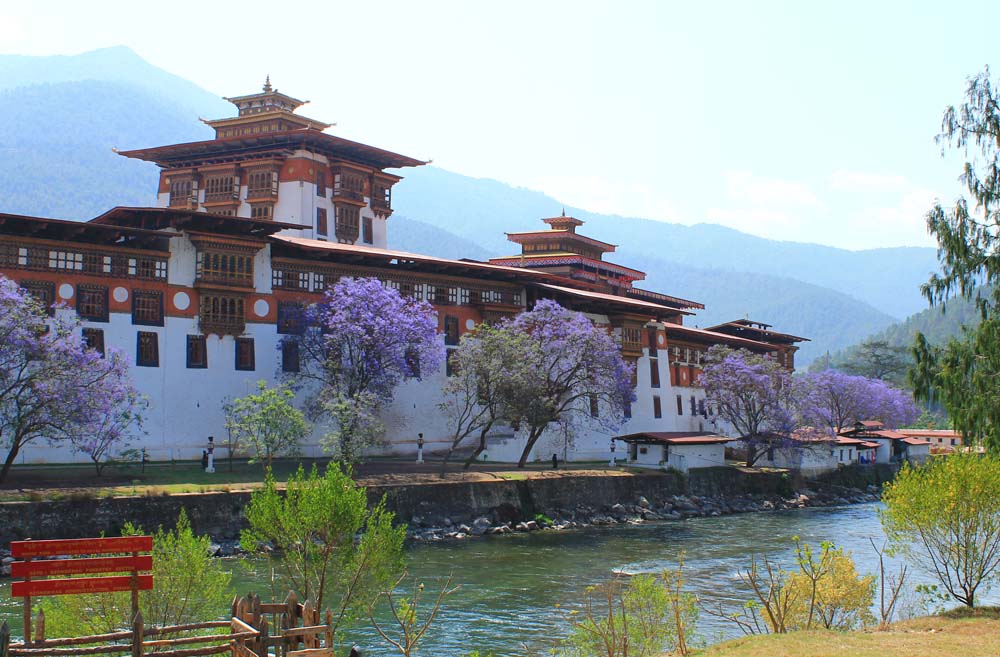
PM: Drive for 20 minutes to reach Punakha Dzong that was built in 1637 and the winter residence of the monk body. This remarkable fortress is built between two rivers the Pho-chu (male) and the Mo-chu (female) and has survived many glacial floods and fire. The Punakha Dzong has been restored to its full glory after about 12 years of restoration work and is replete with detailed traditional carvings and colorful paintings in perfect condition. It also houses many sacred temples.
After the sightseeing tour, return to the Hotel
Dinner and overnight at the hotel
We will leave our cultural tour group here in Punakha and Board the vehicle and Drive 125km for 3 – 4 hours to reach paro.
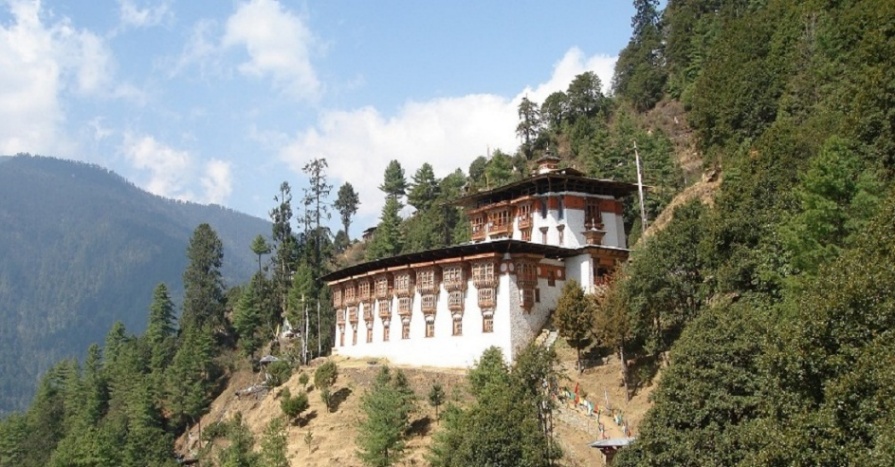
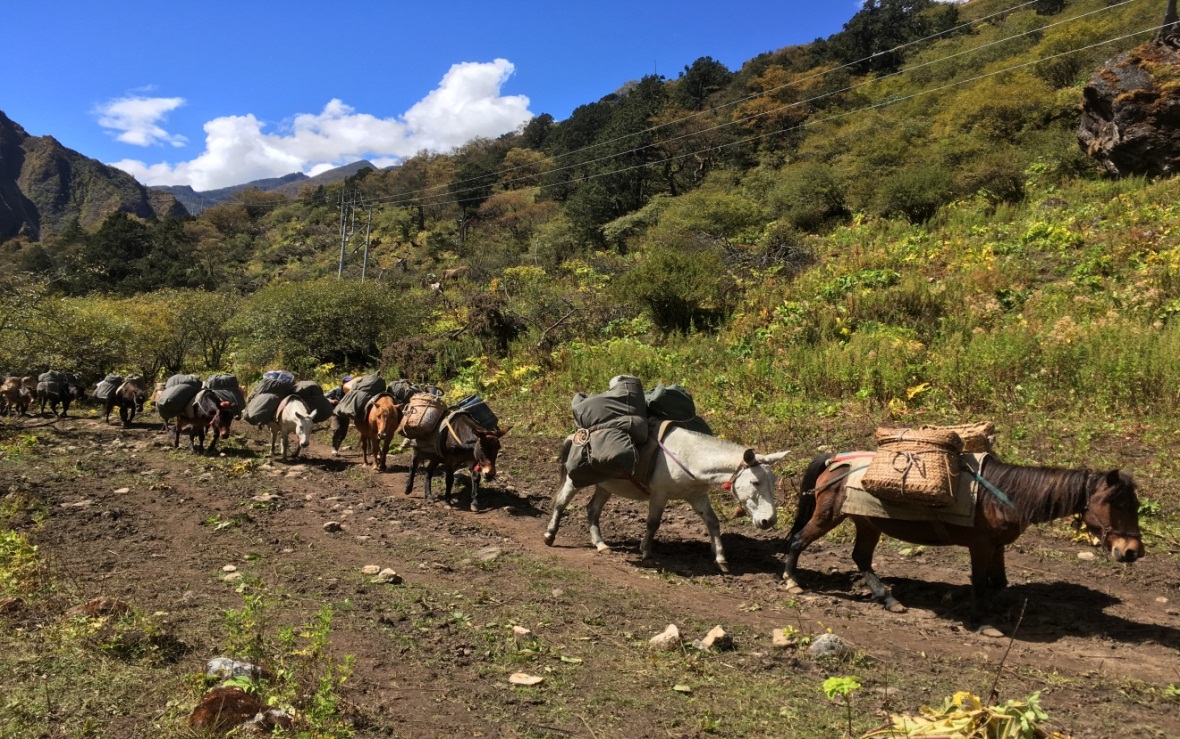
After breakfast, set out on the walk to the Ta Dzong where the Horses will pack the luggage, Camping equipments and food stuff for the trek. This is a relatively short trekking day but a good introduction as one climbs over 1000 ft. and that is quite strenuous. Initially the trail follows a graveled path past a few farms for about 30 minutes and then makes a steep ascent to a ridge before traversing a trail through blue pine and fir forest to Damche Gom. However, the trail is well defined and makes for easy walking. If the weather is clear, the Paro Valley can be seen with the snowcapped mountains in the far distance. Upon arrival at Jili Dzong, descend for 100 m to our campsite. In the afternoon, visit the Dzong.
Dinner and Overnight at Camp
The trek begins with 1 ½ hours of a steady climb and is followed by a more gentle and gradual ascent. The trail then passes through thick alpine forest and dwarf rhododendron trees and arrives at Jangchulakha which is about 11 kilometers from Jili Dzong. This is a Yak herders summer settlement and one may see yaks and yak herders going about their daily routine.
Dinner and Overnight at Camp
From here, the trail ascends steeply to a ridge for about 2 hours and then follows the pleasant ridgeline walk for about an hour. On a clear day, the view of the mountains and valley are stunningly beautiful. The campsite is located close to the Jimilang tsho with a literal translation of Sand Ox Lake, which is well known for giant sized trout.
(Trek duration: 4/5 hours)
Dinner and overnight at Camp
After breakfast, set out through dwarf rhododendron trees and Janetso Lake. Spring is the time for flowers and the rhododendrons should be in full bloom at this time of year.
There are supposedly 36 varieties of Rhododendrons in Bhutan and this trek can also be called the Rhododendron trail as they all are a blaze during this time of year. There are many yak herder’s camps in the area where you will have the opportunity to get a glimpse of a nomad’s life. A shorter day of trekking is definitely more relaxed and enjoyable as one gets the opportunity to ponder and absorb the details and beauty of the landscape and the culture of the local people. The campsite is located close to the Simkota Lake which is famous for trout fishing!
Dinner and overnight at Camp
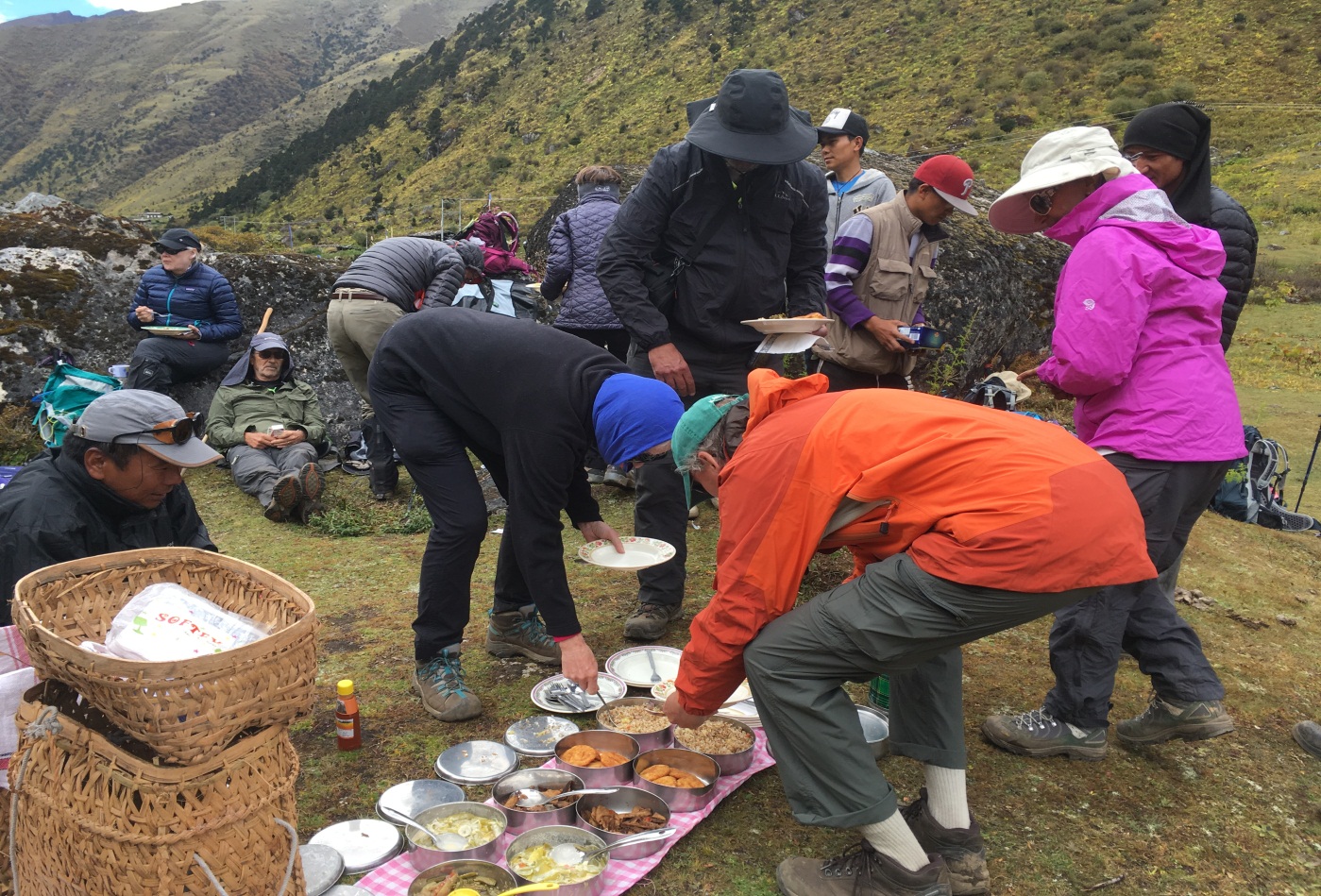
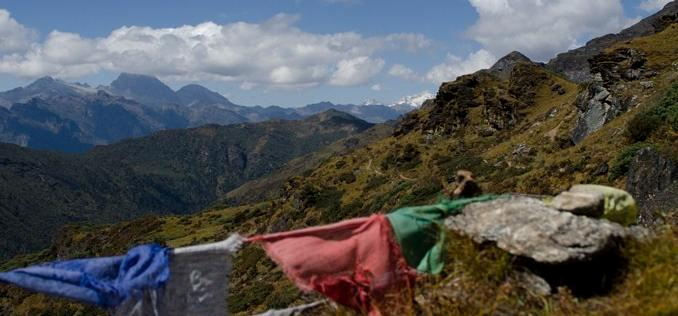
The trek begins with a gradual climb to the saddle at 4180m and then crossing the Pueme la Pass at 4210m. There are spectacular views (weather permitting) of Mount Gangkar Puensum (7541m) the highest mountain in Bhutan and other Himalayan mountain ranges which is as good a view from the famous Dochula pass on Bhutan. Although a bit early for lunch, it is an ideal place to stop and enjoy the mountain views (weather permitting) while lunch is being prepared.
After lunch, the trail descends past Thujidrag Goenpa, a meditation center hanging on the side of a precipitous rock face and continues through juniper trees to Phajoding Goemba (3,870m), an important pilgrimage site.Originally the site of a 13th century monastery, the Phajoding Monastery is considered to be one of the oldest and most decorated monasteries in the country, and is a major meditation site for pilgrims and practitioners of the Buddhist faith. Nestled in the hills overlooking the capital of city of Thimphu, the monastery is accessible through well- defined trekking paths, frequently travelled upon by many tourists, monks, and pilgrims. The current monastery building is a part of local history, being built nearly three centuries ago by Gyelwa Shakya Rinchen,the 9th Je Khenpo (or Spiritual Leader) of the country, in 1748. From the monastery's precipice, one can enjoy some truly breathtaking sunrises and sunsets, including sweeping views of the country's mountainous terrain.
Later proceed to Phajodhing, through a forested area of mostly blue pine for a much
deserved break and night halt.
Dinner and Overnight at Camp
After Breakfast hike down to the roadhead (3 Hours) then Bid farewell to the trek team and halt for the lunch in Thimpu.
After lunch, board the waiting vehicle for (3 hours) drive to Paro.
Upon Arrival, Check into the hotel
Rest of the day is free to browse through the Bazaars of Paro.
Dinner and Overnight at hotel
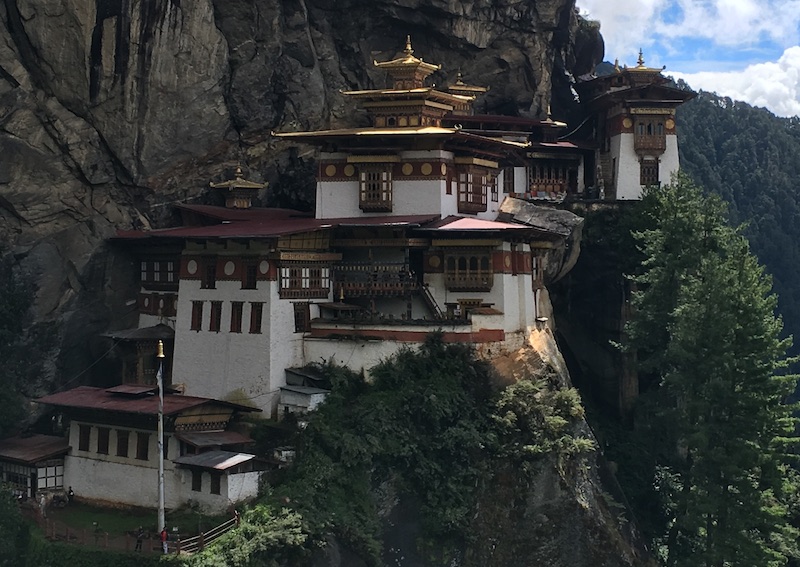
After an early breakfast board the waiting vehicle and drive to Satsam Chorten (10 Kms) for a short trek to Taktsang Monastery. The Taktsang also known as “the Tiger’s Nest” was named after Guru Rimpoche miraculously flew to the cave on the back of a tigress from Khempajong in the region of Kurtoe. From Satsam, start a steady climb of about 2 hours on a well-defined trail through wooded alpine forests to the Taktsang Monastery. According to the legend, the tigress was a form taken by a consort for the occasion. Guru Rimpoche meditated for three months in a cave in Taktsang and converted the Paro valley to Buddhism. Later, Longchen Pelki Singye, a student of Guru Rimpoche also meditated here in a cave which came to be known as Pelphug or “Pelki’s Cave.
Taktsang is one of the holiest pilgrim sites in the Himalayas. There are 13 holy places in the complex. His Holiness, the 69th Je Khenpo Late Gayshe Gaden Rinchen was born in a cave on the way to the last viewpoint of Taktsang.
After the visit, walk down to the Restaurant for a much deserved lunch break. Then descend to the valley floor to meet up with waiting vehicle and drive to Paro town.
EVE: Traditional Hot stone bath and Dinner at the farm House
Dinner and Overnight at the Hotel
Day free until final departure transfer to airport for onward flight
Transfer to airport and depart.
Includes/Excludes
Cost Includes
- Accommodation on twin/double sharing room on MAP(3-star): River Valley View in Paro for 04 nights, Tashi Yoedling in Thimpu for 02 Nights, Meri Puensum in Punakha for 01 Night
- Lunch at selected local Restaurants
- SDF (Government Fees)
- Bhutan Visa Fee
- 05 Nights / 06 Days DRUK PATH TREK inclusive of accommodation in 2 man A tents, Foam Mats, Dining, toilet and kitchen tents, all meals prepared by a team of a cook + kitchen helpers and assisted by horsemen and horses to carry luggage.
- English-speaking Bhutanese guide
- One-time monument fees where applicable
- Bottled water in vehicle
- Hot stone bath
Cost Excludes
- International airfare
- Personal insurance and evacuation.
- Flight delays or cancellation due to adverse weather condition.
- Photography charges for Still and Video cameras inside monasteries.
- Items of a personal nature such as bar bills, alcoholic beverages, bottled -drinks and mineral water, extra mileage, etc.
- Personal gratuities such as tips Escort, hotel staff, guides and drivers etc.
- FINE for venturing into prohibited area
- Oxygen and Mineral water
- Costs incurred due to natural calamities, strikes, breakdowns and beyond the control of Sacred Summits (P) Ltd and its associates.
- Items not mentioned in the cost includes

